
Reviewed · CITY TOURS
Yerevan City Tour
Yerevan’s center makes a strong first impression in two very different ways: monumental white stone at the Cascade Complex, then lively cafés, shops, theaters, and broad avenues nearby. I like that this tour links the city’s major sights on foot, and I like the human touch of guide Anush Manukyan, whose clear, engaging explanations are a repeated strength. The route also includes useful orientation for a first day in town.
The main consideration is pace. Two and a half hours is enough for an introduction, not a full study of Yerevan. Several stops are listed for 30 or 40 minutes, but the exact balance between walking, explanation, and interior access may vary. On a hot day, bring water and wear sensible shoes.
Key points to know before booking
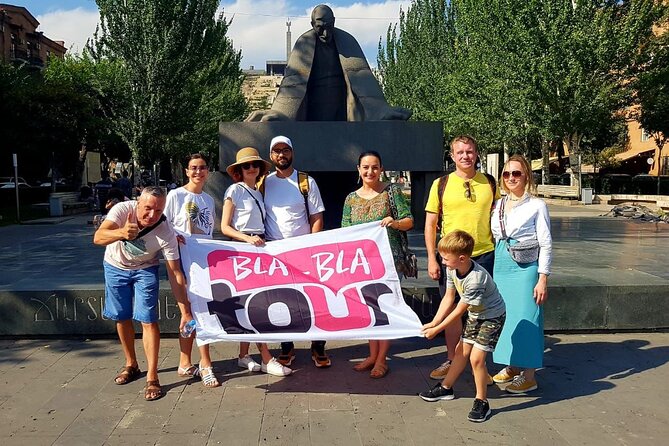
- The Cascade is the visual centerpiece: White travertine gives this huge stairway its distinctive look, and the complex houses the Cafesjian Center for the Arts.
- You get a central-city walking route: France Square, the Opera Theatre, Northern Avenue, and Abovyan Street fit together naturally.
- Anush is the named guide: Her style is described as simple, lively, personal, and easy to follow, with tours available in English.
- The group is capped at 15 people: That is small enough for questions without the price of a private tour.
- The tour lasts about 2 hours 30 minutes: It begins at 11:00 a.m. near the Cascade and finishes at a different central Yerevan location.
- The price is $40 per person: The value rests mainly in the guide’s commentary and the efficient introduction to central Yerevan, since the route itself uses public city spaces.
Starting at the Cascade, Yerevan’s great staircase
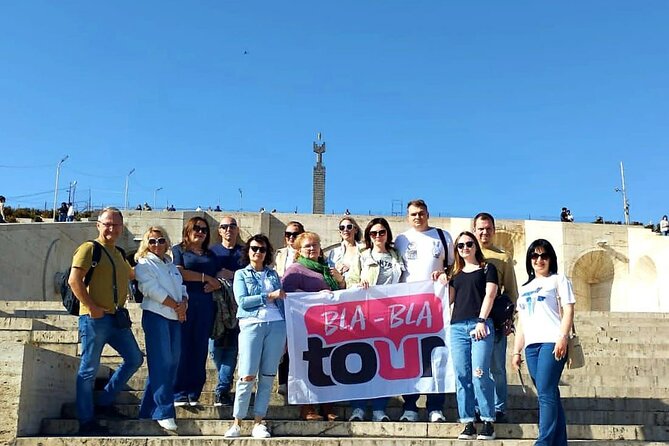
The meeting point is Kaskad, on Moskovyan Street, and that is a smart place to begin. The Cascade is not simply a staircase connecting two levels of town. It is one of Yerevan’s defining architectural projects, built from white travertine stone because enough of this local material was available for a construction of such scale.
That white stone matters. In bright daylight, it gives the structure a clean, almost monumental appearance. The broad stairway and terraces create a strong sense of space, while the city opens out around it. You get an immediate lesson in Yerevan’s visual character: grand public design, pale stone, and a city center made for walking.
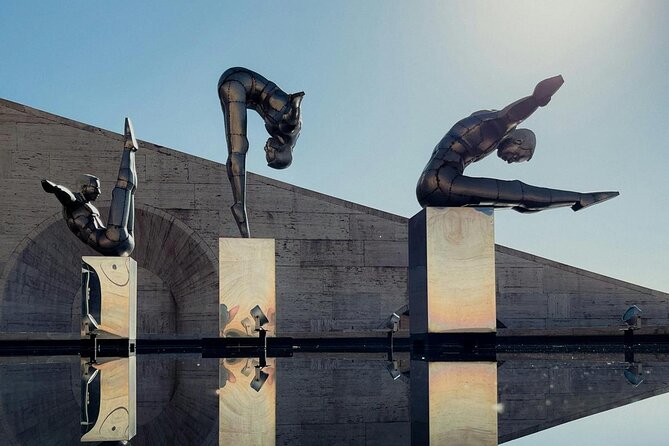
The complex houses the Cafesjian Center for the Arts. Its exhibition halls hold permanent and temporary displays, with contemporary art and sculpture changing over time. The tour includes admission to this stop, though you should not assume that the full visit will become an extended museum session. The scheduled time is about 30 minutes, so the guide may focus on the building, the art center, and selected works rather than every gallery.
I like this opening because it gives you both architecture and culture before the tour moves into the streets. If you are new to Yerevan, the Cascade is also a useful landmark for finding your bearings later. You may want to return on your own if the exhibitions catch your interest.
The practical drawback is that a monumental stairway can be demanding for some people, particularly in hot weather. The tour is described as suitable for most participants, and it is near public transportation, but anyone who finds long stairways difficult should ask the guide about the walking arrangements at the start.
A few more Yerevan days to weigh up
- Group Tour: Garni, Symphony of Stones, Geghard, Lavash Baking
★ 5.0 · 1,042 reviews - Group Tour: Lake Sevan (Sevanavank), Dilijan (Goshavank, Haghartsin)
★ 5.0 · 1,036 reviews - Group tour: Khor Virap, Noravank, Areni Winery and Cave
★ 5.0 · 651 reviews
France Square and the city’s cultural core
From the Cascade, the route continues toward France Square, at the meeting point of Sayat Nova Avenue and Mesrop Mashtots Avenue. It is near the National Academic Theater of Opera and Ballet, so this stop places you in one of the city center’s main cultural zones.
The square is useful as a transition. At the Cascade, you are looking at a major art and architecture project. Here, you begin to understand how Yerevan’s avenues and public spaces connect. A guide can make a place like this more meaningful by explaining what you are seeing and how it fits into the city around it.
The scheduled time is about 30 minutes. That should allow enough time to pause, hear the background, and ask questions without turning the stop into a long standstill. The experience is built around the guide’s interpretation, not a list of photo stops. That is important because France Square itself may not take long to inspect once you have seen its layout.
Anush’s approach appears especially suited to this sort of stop. Her explanations are described as clear and simple, with interesting facts added from her own life. That personal element can help keep a central-city walk from feeling like a string of dates and building names.
The Opera Theatre and a slice of Armenian performance culture
The Opera Theatre is one of the route’s most useful stops for understanding Yerevan’s cultural identity. Groundbreaking took place on November 28, 1930, marking the 10th anniversary of Soviet Armenia. The building officially opened on January 20, 1933.
The theater soon developed a ballet company. Its first ballet performance was Tchaikovsky’s Swan Lake in 1935. Those details give the building more meaning than a quick exterior photograph. You can connect the architecture with the city’s performing arts tradition and with the political period in which the building was created.
The stop is listed at about 30 minutes. Admission is included, but the information provided does not promise a performance or a complete backstage visit. Treat this as an architectural and cultural stop, with the guide explaining the building and its place in Yerevan.
I appreciate the way this fits between France Square and Northern Avenue. You are not being taken far out of the center. Instead, the tour uses nearby sights to show how public spaces, culture, shopping, and daily city life overlap.
For you, the value here will depend on your interest in architecture and performance. If you love theaters, Soviet-era urban planning, or ballet, this may be one of the most rewarding portions. If you want only major viewpoints, it may feel less immediate than the Cascade.
Northern Avenue, modern Yerevan on display
Northern Avenue offers a different face of central Yerevan. Located downtown, it is lined with luxury residential buildings, branded shops, commercial offices, cafés, hotels, restaurants, and nightclubs. The avenue is a clear contrast to the monumental stairway and theater.
This is the part of the walk that shows how the city works now. You can see the polished commercial side of Yerevan, with businesses and public life concentrated along a walkable central route. A guide can help you understand the contrast between historic institutions and newer development rather than treating the avenue as just a shopping street.
The scheduled time is about 20 minutes, making this the briefest stop. That seems reasonable. Northern Avenue is best read as part of the walk, not as a museum where you need a long visit. You will have time to take in the buildings, note the cafés and shops, and continue toward the older central streets.
Do not book this tour expecting a dedicated shopping excursion. The avenue is included as part of the city overview. You might find it useful for deciding where to return later for coffee, a meal, or an evening walk, but the guide’s focus is the city and its character.
Same drive out of the city, a completely different day:
- Yerevan: Garni, Geghard, Symphony of Stones & Lavash Baking
★ 5.0 · 589 reviews - Group Tour: Tsaghkadzor (Kecharis, Ropeway), Lake Sevan, Trout barbecue treat
★ 5.0 · 511 reviews - Group Tour: Khor Virap, Noravank, Tatev monasteries (wayback on Ropeway)
★ 5.0 · 506 reviews - From Yerevan:Sevan, Dilijan, Haghartsin, Goshavank, Lake Parz
★ 4.5 · 454 reviews
Abovyan Street and the statue of Khachatur Abovyan
The final listed stop is the Monument to Khachatur Abovyan, with about 40 minutes allocated. The monument is located on Abovyan Street, one of Yerevan’s main downtown streets.
Abovyan Street is described as a mix of cultural and educational institutions, upscale residential buildings, brand shops, offices, cafés, hotels, restaurants, and nightclubs. That range is valuable because it gives you a broader picture of central Yerevan. The city is not presented as a collection of isolated monuments. It is a working center where education, culture, commerce, and nightlife share the same streets.
The longer time allocation suggests that this may be one of the more conversational parts of the tour. You can pause at the monument, hear about Abovyan, and look at the street around it. The available information does not specify the precise content of the guide’s explanation, so I would expect the stop to center on the figure, the street, and the surrounding city rather than on a formal museum visit.
This is also a useful ending because you finish among places you may want to use during the rest of your stay. If Anush points out cafés, restaurants, or cultural buildings during the walk, you can return later with more confidence. The stated ending point is 5GG6+QH9 in Yerevan, different from the Cascade meeting point, so plan to continue your day from there rather than backtracking automatically.
What Anush adds to the walk
The named guide is Anush Manukyan, also written as Anoush in some tour material. Her strongest quality is communication. The available feedback describes her as professional, engaging, easy to understand, and able to explain the city without making the tour feel stiff.
That matters on a short walking tour. You have only 150 minutes, so a guide who can keep the story moving is more useful than someone who tries to cover every fact. The comments about her clear speech are especially relevant if you are booking in English. The tour is offered in English, and Anush is also described as conducting tours in Russian and Spanish.
I like the mention of personal stories. A city becomes easier to remember when facts are tied to lived experience. Anush is described as adding details from her own life and welcoming sincere questions. You should use that opportunity. Ask about the buildings you pass, daily life in Yerevan, or the cultural meaning of the places on the route.
The tone also seems to suit people who dislike a dull, formal lecture. The tour is described as dynamic and not boring, with explanations that remain understandable. That does not guarantee the same guide on every departure, but Anush is the guide specifically associated with the experience information provided.
Is $40 a fair price?
At $40 per person, this is not the cheapest way to walk around central Yerevan. You can see the outside of several sights on your own at no cost. The question is what you want your $40 to buy.
Here, you are paying for a planned route, an English-speaking guide, admission to the Cascade complex, and a small group of no more than 15 people. You are also paying for context. Without a guide, you might recognize the Cascade and Opera Theatre but miss why their materials, dates, and cultural roles matter.
The price looks more reasonable if this is your first visit or if you have only a short stay. In two and a half hours, you cover several central districts and gain a practical sense of how the sights relate to one another. You may save time later because you know which streets and venues deserve a second visit.
If you already know central Yerevan well, the value depends on the guide. The route itself is familiar city-center territory, but the tour can still add details and a different angle. One useful feature is that the route moves slightly beyond a simple main-sights checklist, with time on Abovyan Street and Northern Avenue as well as the better-known Cascade and Opera area.
Timing, group size, and what to bring
The tour starts at 11:00 a.m. and lasts approximately 2 hours 30 minutes. That timing gives you a full morning activity without taking the whole day. You can plan lunch or another visit afterward, though the end point is not the starting point.
A maximum of 15 participants is a sensible middle ground. You avoid the anonymity of a very large group, while the price remains lower than a private walk. A group of that size can still spread out near traffic or busy sidewalks, so stay close enough to hear the guide.
Wear comfortable shoes. This is a walking tour with a major stairway at the Cascade and several central streets. Hot weather has already been a factor on at least one departure, so water and light clothing are practical choices.
The tour is near public transportation, and most people can participate. Service animals are allowed. Confirmation is provided at booking, and free cancellation is available if you cancel at least 24 hours before the start time. Changes or cancellations made within 24 hours are not accepted for a refund.
Who will get the most from this Yerevan tour?
I would choose this for a first morning or first full day in Yerevan. The route gives you a quick orientation, introduces the city’s main architectural styles and public spaces, and leaves you with several useful places to revisit.
It also suits you if you prefer a personal walking tour to a bus ride. You move through the center at street level, with time to notice shops, cafés, public buildings, and changes in the city’s character. The small group and question-friendly guide make it easier to shape the experience around your interests.
It may be less suitable if you want a long museum visit, a food-focused experience, or transport to sights outside central Yerevan. The stated route stays in the city center, and the listed stops are close enough to form one walking circuit. You should also consider the stairs and the warm midday start if mobility or heat is a concern.
Should you book the Yerevan City Tour?
Book it if you want a clear, efficient introduction to central Yerevan and value a guide who explains places in a warm, direct way. The Cascade, Opera Theatre, Northern Avenue, and Abovyan Street give you a useful mix of art, architecture, culture, shopping, and everyday city life.
I would be less quick to book if you have already spent several days exploring these streets or want a specialized subject. At $40, the tour earns its value through Anush’s commentary and the organized route, not through a long list of included attractions.
For a first visit, though, this is a practical choice. Start at 11:00 a.m., bring water, ask questions, and use the final stop as a launch point for the rest of your day.
FAQ
How long is the Yerevan City Tour?
The tour lasts approximately 2 hours and 30 minutes.
What time does the tour start?
The scheduled start time is 11:00 a.m.
Where does the tour begin?
The meeting point is Kaskad, on Moskovyan Street in Yerevan.
Where does the tour finish?
The stated end point is 5GG6+QH9 in Yerevan. It is different from the Cascade starting point.
What language is the tour offered in?
The tour is offered in English.
How many people can join the tour?
The maximum group size is 15 people.
Is admission included?
Admission is included for the Cascade Complex stop. The supplied information does not list separate admission charges for the other stops.
Can I cancel for a full refund?
Yes. You can cancel at least 24 hours before the local start time for a full refund. Cancellations or changes made less than 24 hours before the start time are not accepted for a refund.
Newly listed around Yerevan
- Private Yerevan City Tour with museums★ 5.0 · 5 reviews
- Amazing Yerevan★ 5.0 · 7 reviews
- Wine Trip in Yerevan★ 5.0 · 3 reviews
- Mountaintop Eats★ 5.0 · 7 reviews
- Vayots Dzor Areni Wine Route★ 3.5 · 3 reviews
- Group Tour: Tsaghkadzor (Kecharis,Ropeway), Lake Sevan, Trout BBQ★ 5.0 · 7 reviews
- Private tour to Sevan, Dilijan Off-road tour & Horseback riding★ 4.5 · 5 reviews
- Garni Gorge and Azat Reservoir OFF ROAD Tour & Water Sports★ 5.0 · 6 reviews
City Tours, compared.

Yerevan city tour with drinks in a classic car with photography
Read our review →
Private Yerevan City Tour: Erebuni, Matenadaran & Tsitsernakaberd Museums
Read our review →
Walking Yerevan City Tour with 5 Wine & 10 years-old brandy
Read our review →
Private tour to Tsaghkadzor city (Ropeway), Lake Sevan, Sevanvank, Dilijan
Read our review →
Private Tour to Tsaghkadzor city (Ropeway) and Kecharis Monastery
Read our review →
Private tour to Dilijan city, Haghartsin Monastery, Yell Extreme Park
Read our review →Browse the lists this tour appears in