
Reviewed · CITY TOURS
Soviet Yerevan: Small-Group City Experience
Yerevan’s Soviet past comes alive through ordinary places: a former Lenin Square, a metro station, a food market nicknamed Bangladesh, aging apartment blocks, and a children’s railway. This is not a parade of grand monuments. It is a close look at how people moved, shopped, lived, and spent free time.
I like the small maximum of six people, which gives the guide room to explain details and answer questions. I also like the mix of metro travel, a Soviet-style van, market snacks, and personal stories from guides such as Marine. The main drawback is that the route is tightly planned, so you should not expect extra stops or much free time.
Key points at a glance
- Lenin Square becomes modern Republic Square: Learn how Armenia’s central civic space changed after independence.
- The metro is part of the lesson: Ride from Republic Square toward Sasuntsi Davit, one of Yerevan’s original stations.
- Bangladesh is a market district: Browse agricultural products and try local snacks in Malatia-Sebastia.
- Apartment blocks tell the social story: Beknazarian Street shows how Soviet housing was built for the working population.
- The Children’s Railway still carries its original charm: See a 1937 station building and locomotive near the Hrazdan River.
- Food is built into the visit: Perashki, ponchik, a local sweet, drinks, and possibly Soviet-style ice cream are included.
Why Soviet Yerevan is best seen through ordinary places
Many city tours stay near Yerevan’s best-known sights. This one moves outward and asks a more useful question: how did Soviet rule shape daily life?
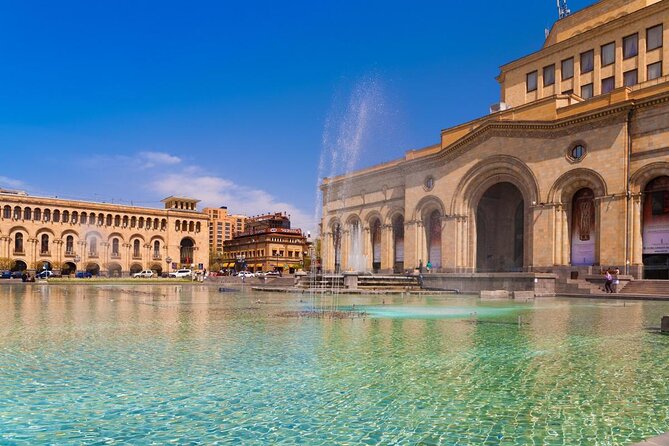
You begin at Republic Square, once called Lenin Square. A statue of Vladimir Lenin used to dominate the space, and Soviet parades took place here twice a year, originally three times. After Armenia became independent, the statue disappeared and the square received its present name.
That change gives you a quick lesson in Armenia’s political shift. You are not only looking at buildings and fountains. You are looking at a public space that changed meaning when the country changed direction.
The tour then leaves the polished center. That is where the experience becomes more revealing. A metro station, a working market, apartment blocks, and a small railway can tell you more about Soviet life than a formal museum display. I like this approach because it shows the system through things people used.
The route is also carefully ordered. One review described it as methodical and well planned, and that is a fair way to understand the format. You move from the symbolic center to public transport, then to food and housing, before ending with a recreational project from the Soviet era.
A few more Yerevan days to weigh up
- Group Tour: Garni, Symphony of Stones, Geghard, Lavash Baking
★ 5.0 · 1,042 reviews - Group Tour: Lake Sevan (Sevanavank), Dilijan (Goshavank, Haghartsin)
★ 5.0 · 1,036 reviews - Group tour: Khor Virap, Noravank, Areni Winery and Cave
★ 5.0 · 651 reviews
Republic Square and the missing Lenin statue
The opening stop takes about 15 minutes at Republic Square. Since admission is free, this is a brief outdoor introduction rather than a long visit.
Your guide can use the square to explain the public rituals of the Soviet period. Parades and celebrations were held here, and Lenin’s statue once provided the political focus. Today, the same place carries a different national message.
This stop works best if you pay attention to what is absent. The missing statue is part of the story. The renamed square also shows how public symbols were revised after independence.
Do not expect a long architectural lecture here. The value is in setting the political frame for everything that follows. You meet at the Ministry of Foreign Affairs, Government House Number 2, on Republic Square, so arriving a little early should make the start easy.
Sasuntsi Davit station and the metro ride
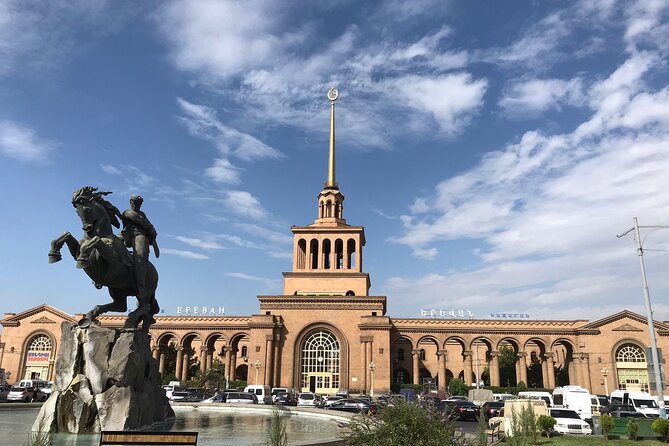
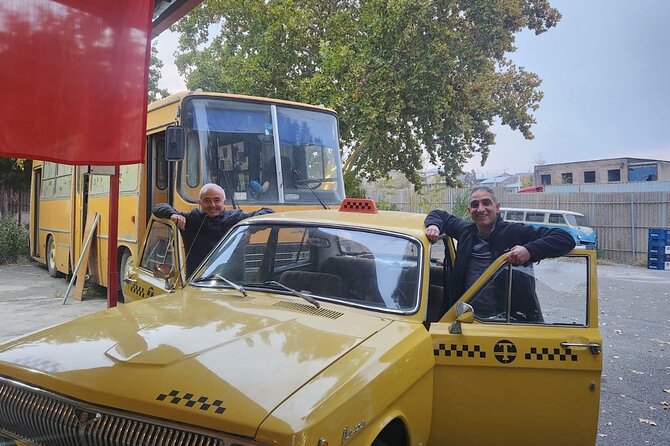
The next stop is Sasuntsi Davit Street, where you spend about 35 minutes. The station opened to the public on March 7, 1981, and is linked to Yerevan railway station by a pedestrian tunnel.
The station is named for David of Sassoun, an important Armenian folk hero whose statue is located outside the railway station. That name matters because it places Armenian cultural identity beside Soviet public infrastructure.
The metro ride is included in the tour price. This is more useful than simply hearing about Soviet planning in a lecture. You get to use one of the systems built to move people through the city.
The station is also one of Yerevan’s original metro stops, so it helps explain the age and reach of the network. You should expect the metro portion to be practical and brief, not a separate transit tour. The route continues by Soviet-style van, giving you two forms of transport tied to the period.
I especially like this part for readers who want to see how a city works. You are not just taking a sightseeing bus from one photogenic stop to another. You are using public transportation as part of the subject.
Malatia-Sebastia and the Bangladesh market
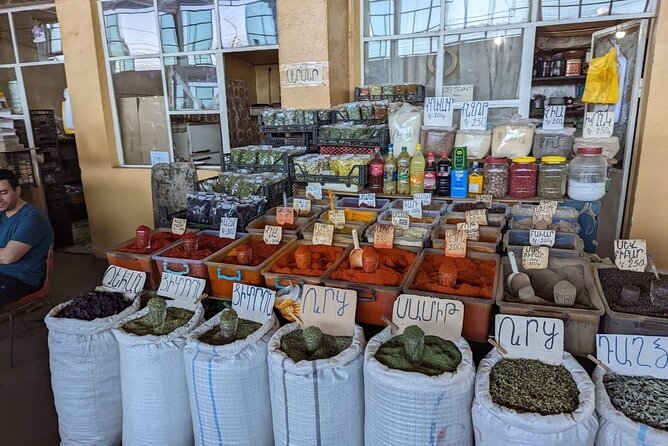
The longest stop lasts about an hour in Malatia-Sebastia. Within this district is an area known as Bangladesh, a nickname that is likely to be one of the tour’s most memorable details.
The area is known for agricultural products. You can walk around the market, see what is being sold, and sample local food along the way. Perashki, ponchik, and a local sweet are included, along with drinks and other small treats.
This is where the tour shifts from political history to daily routine. Markets show what people actually buy, how food is handled, and how neighborhood life feels away from central Yerevan. You may find this less polished than the city center, but that is exactly the point.
The food also helps break up the history. A four-hour tour can become tiring if every stop is a lecture. Here, snacks give you something concrete to try while the guide explains the district and its Soviet connections.
The one thing to keep in mind is that this is a working market, not a staged food show. You should be ready to walk around and look closely rather than expect a formal tasting session with a long menu. The supplied food is part of the tour, but the wider value comes from seeing the market itself.
Same drive out of the city, a completely different day:
- Yerevan: Garni, Geghard, Symphony of Stones & Lavash Baking
★ 5.0 · 589 reviews - Group Tour: Tsaghkadzor (Kecharis, Ropeway), Lake Sevan, Trout barbecue treat
★ 5.0 · 511 reviews - Group Tour: Khor Virap, Noravank, Tatev monasteries (wayback on Ropeway)
★ 5.0 · 506 reviews - From Yerevan:Sevan, Dilijan, Haghartsin, Goshavank, Lake Parz
★ 4.5 · 454 reviews
Beknazarian Street and Soviet apartment life
At Beknazarian Street, you spend about 30 minutes exploring what is described as a CCCP, or USSR, district of Yerevan. The focus is on apartment buildings built to house the proletariat, along with the final buildings constructed during the Soviet period.
This stop gives the tour its clearest look at housing. Soviet apartment blocks were not only an architectural style. They were a way to organize urban life and provide homes for a growing working population.
Look up as you walk. The buildings are the main evidence here, and the guide’s explanation gives them meaning. You may notice how different this area feels from Republic Square, where government buildings and national ceremony dominate.
A Soviet ice cream stop may also be part of the visit. One review called the tour informative and entertaining and singled out the possibility of ice cream. The wording matters: it is not something you should treat as guaranteed. If available, it is a fitting small pleasure, and a reminder that Soviet memories are not all political or grim.
This section will suit you if you enjoy urban details more than famous attractions. It is less about taking one perfect photograph and more about understanding the housing patterns that shaped ordinary life.
The Children’s Railway beside the Hrazdan River
The final major stop is the Children’s Railway, where you spend about 40 minutes. It is located between the Hrazdan River and the Hrazdan water canal, and it was built in 1937.
Children’s railways existed in several parts of the Soviet Union. Their purpose was educational and practical: children could learn about trains and railway work. In Yerevan, the original main station building and the first locomotive from 1937 remain in place.
That surviving equipment gives the stop a strong sense of time. You are seeing a project designed to shape young people’s interests, not simply a railway made for transport. The railway continued operating after the Soviet Union broke apart, adding another layer to the story.
I like this ending because it is lighter than the political opening. After Lenin Square, metro planning, food distribution, and worker housing, you finish with a place built around play and learning.
The setting beside the river and canal also gives you a change of pace. Still, do not assume this is a long train ride or a full railway museum. The supplied details promise the station, locomotive, and the story of the railway. The attraction is its surviving Soviet character.
A small group makes the storytelling stronger
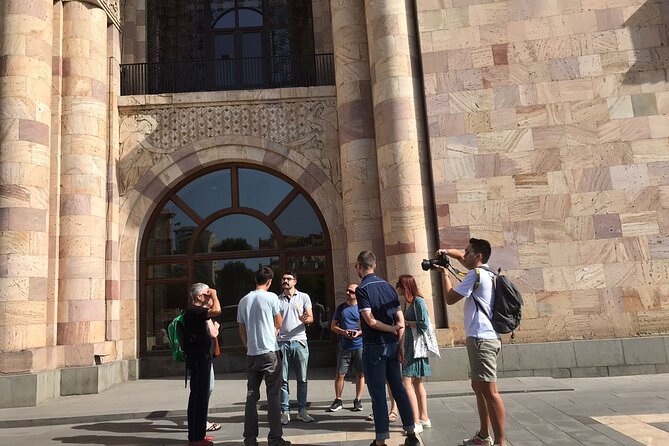
The tour accepts no more than six people. That is a useful limit for this route, especially in a market and on public transport.
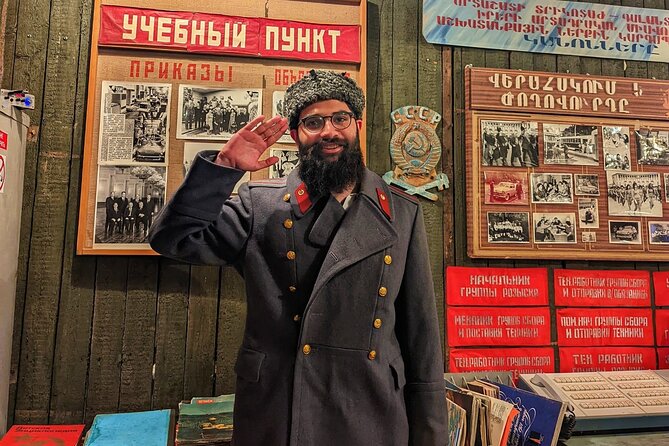
A small group can stay together more easily, and you have a better chance to ask about details that catch your eye. The format also fits the personal style described by the strongest feedback. Guide Marine was praised for sharing Soviet jokes and personal memories, while another description highlighted personal insights into the past.
Those details matter because Soviet history can feel abstract. A guide who connects policy to lived experience can explain why a neighborhood, station, or snack matters without turning the afternoon into a dry classroom session.
The route is not designed for spontaneous detours. One careful description pointed out that you should not expect to squeeze in extra stops. I see that as both a limit and a benefit. You sacrifice flexibility, but the four hours have a clear shape and the planned stops receive enough attention.
English is the offered language. The guide is local, and the experience is designed around explanation rather than independent sightseeing.
What the $65 price includes
The price is $65 per person. For four hours, that is not the cheapest way to walk around Yerevan, but the value depends on how much of the included structure you would otherwise have to arrange yourself.
The fee covers:
- A local expert guide
- Metro transportation
- Travel in a Soviet-style van
- Perashki
- Ponchik
- A local sweet at the market
- Drinks and small treats along the way
- Access to the Children’s Railway
Republic Square, Sasuntsi Davit Street, the market, and Beknazarian Street do not require separate admission. The Children’s Railway is the one listed stop with an admission ticket included.
I think the price is fair if you want context, transport, and food in one compact half-day. You are paying for the route and interpretation as much as for entry fees. If you prefer to wander alone, use public transport without a guide, and discover markets at your own pace, you may find the cost harder to justify.
The small group helps the value. A private tour would normally cost much more, while a large bus tour would likely lose the personal feel that makes the local stories useful.
Timing, meeting point, and practical limits
The tour lasts about four hours and is offered on Mondays from 10 a.m. to 2 p.m. The listed operating period runs from November 12, 2025, through January 13, 2027.
You start at the Ministry of Foreign Affairs, Government House Number 2, on Republic Square in Yerevan. The tour ends at Diana Abgar Park on Arami Street. Since the end point differs from the start, plan your next activity around the central Yerevan finish rather than assuming you will return to Republic Square.
A mobile ticket is provided, and the experience is offered in English. Most people can take part, according to the supplied participation information. The tour requires a minimum number of bookings, so a cancellation for that reason may lead to another date, another experience, or a full refund.
You can cancel for a full refund up to 24 hours before the start time. Changes or cancellations inside that 24-hour window are not accepted, so keep that deadline in mind when making plans.
Who should book this Yerevan tour
I would choose this experience if you have a real interest in Soviet history, urban planning, public transport, or the everyday side of Yerevan. It also suits anyone who has already seen the central sights and wants to understand how the city extends beyond the main square.
It is a good match for curious first-time visitors too, especially if you prefer a clear route over a loose walking tour. The food stops and jokes from the guide keep the subject approachable.
I would not choose it if your main goal is Armenia’s ancient monasteries, religious art, or grand mountain scenery. None of those are the focus here. You also should not book it expecting a slow afternoon with lots of free time, since the route is tightly organized and includes several forms of transport.
Should you book Soviet Yerevan?
Book it if you want to see the city through its recent past rather than only its celebrated sights. The strongest reasons are the small group, the mix of metro travel and neighborhood walking, the Bangladesh market, the apartment blocks, and the 1937 Children’s Railway.
The tour’s best quality is its focus. It does not try to cover every side of Yerevan. Instead, it follows a clear line from Lenin’s former square to the places where people traveled, shopped, lived, and learned.
At $65, it offers solid value for a guided four-hour experience with transportation, snacks, and entry included. Just arrive ready for a structured route, limited time for side trips, and a subject that rewards attention to ordinary details.
FAQ
How long does the Soviet Yerevan tour last?
The experience lasts approximately four hours.
What language is the tour offered in?
The tour is offered in English.
How many people can join the tour?
The maximum group size is six people.
Where does the tour begin?
The tour begins at the Ministry of Foreign Affairs, Government House Number 2, on Republic Square in Yerevan.
Where does the tour end?
The tour ends at Diana Abgar Park on Arami Street in Yerevan.
Is transportation included?
Yes. The tour includes a metro ride and transport in a Soviet-style van.
What food is included?
The tour includes perashki, ponchik, a local sweet at the market, and snacks or drinks along the way. Soviet-style ice cream may also be available, but it should not be treated as guaranteed.
Newly listed around Yerevan
- Wine Trip in Yerevan★ 5.0 · 3 reviews
- Private Yerevan City Tour with museums★ 5.0 · 5 reviews
- Amazing Yerevan★ 5.0 · 7 reviews
- Vayots Dzor Areni Wine Route★ 3.5 · 3 reviews
- Group Tour: Tsaghkadzor (Kecharis,Ropeway), Lake Sevan, Trout BBQ★ 5.0 · 7 reviews
- Mountaintop Eats★ 5.0 · 7 reviews
- Private tour to Sevan, Dilijan Off-road tour & Horseback riding★ 4.5 · 5 reviews
- Garni Gorge and Azat Reservoir OFF ROAD Tour & Water Sports★ 5.0 · 6 reviews
City Tours, compared.

Yerevan city tour with drinks in a classic car with photography
Read our review →
Private Yerevan City Tour: Erebuni, Matenadaran & Tsitsernakaberd Museums
Read our review →
Walking Yerevan City Tour with 5 Wine & 10 years-old brandy
Read our review →
Private tour to Tsaghkadzor city (Ropeway), Lake Sevan, Sevanvank, Dilijan
Read our review →
Private Tour to Tsaghkadzor city (Ropeway) and Kecharis Monastery
Read our review →
Private tour to Dilijan city, Haghartsin Monastery, Yell Extreme Park
Read our review →Browse the lists this tour appears in