
Reviewed · ECHMIADZIN CATHEDRAL TOURS
Tsitsernakaber-Hripsime-Echmiatsin-Noy brandy factory
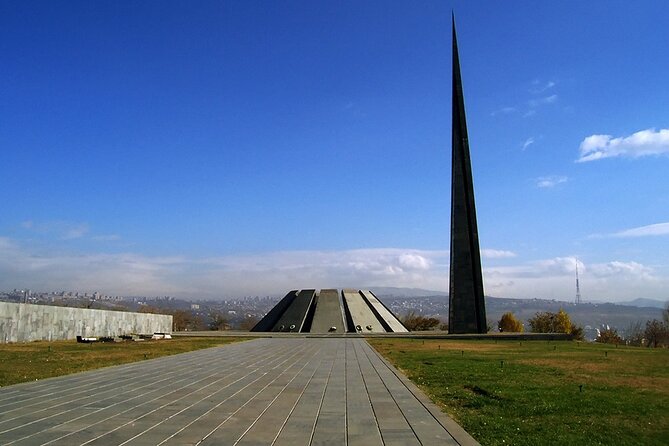
Tsitsernakaberd gives this outing emotional weight before the church visits begin. You move from the Armenian Genocide memorial to Saint Hripsime, Echmiadzin, and a historic brandy cellar, seeing how faith, memory, and local craft fit together in one half-day.
I like the strong mix of sacred sites and Armenian brandy culture, and I like that the air-conditioned vehicle, guide, museum tickets, and tastings are included. Guide Nvard has been praised for clear English, strong historical knowledge, and helping a solo guest with photographs.
The main drawback is timing: the cathedral itself is under restoration, so you see it from outside and visit the museum instead. The tour information also differs slightly on Saint Gayane Church, so confirm the final route before booking.
Key points to know before booking
- Tsitsernakaberd begins the day with Armenia’s most important memorial, including an eternal flame, granite stele, and genocide museum.
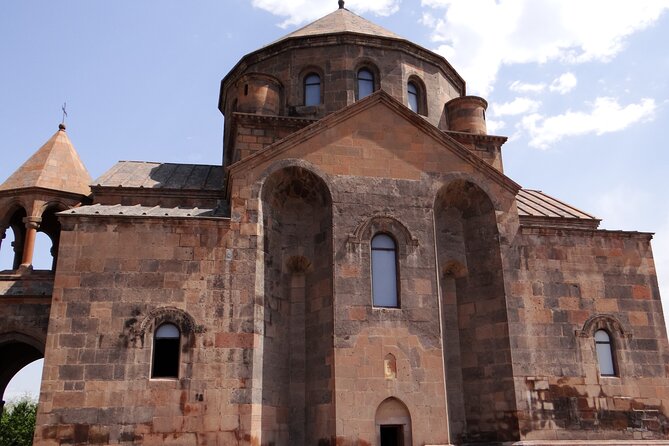
- Saint Hripsime Church dates from the seventh century and is one of Armenia’s UNESCO-listed religious sites.
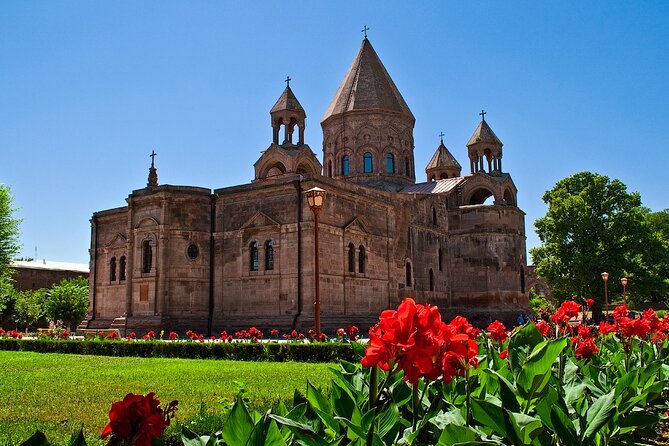
- Echmiadzin Cathedral is the spiritual center of the Armenian Apostolic Church, but restoration limits the visit to the exterior and museum.
- The Echmiadzin museum displays sacred relics, including a piece associated with Noah’s Ark and the Holy Lance.
- Noy Brandy Factory includes a tasting of port wine from 1941 and two brandies, giving the tour a distinctly Armenian finish.
- The group is capped at 15 people, with pickup offered and a start time of 9:30 a.m.
From genocide remembrance to Armenian brandy
This tour works because it does not reduce Armenia to pretty churches and photo stops. It begins at Tsitsernakaberd, a place of mourning and national memory, then moves into the religious center of Vagharshapat, now commonly called Echmiadzin, before ending with the country’s long tradition of wine and brandy production.
You spend about five hours on the full experience, although the church-focused description calls it a four-hour tour. That difference may reflect driving time or a flexible schedule. Either way, this is a substantial morning and early afternoon outing, not a quick half-day photo loop.
The $100 price per person is easiest to judge by what it includes. You receive an air-conditioned vehicle, a local guide, all listed activities, museum admission, and alcoholic drinks at Noy. Lunch is not included, but it can be arranged for $15 per person if needed.
For me, the value depends on your priorities. If you want independent time at each church, this may feel brisk. If you want transport and context without arranging several out-of-town stops yourself, the price is more reasonable.
More Echmiadzin cathedral trips:
- Group Tour: Echmiadzin Cathedral & churches, Zvartnots Temple
★ 5.0 · 352 reviews - Private Half-day Echmiadzin Cathedral, Hripsime & Zvartnots Temple from Yerevan
★ 5.0 · 95 reviews - Private tour to Echmiadzin (st Cathedral), Zvartnots, Khor Virap, Garni, Geghard
★ 5.0 · 67 reviews
Tsitsernakaberd sets the tone
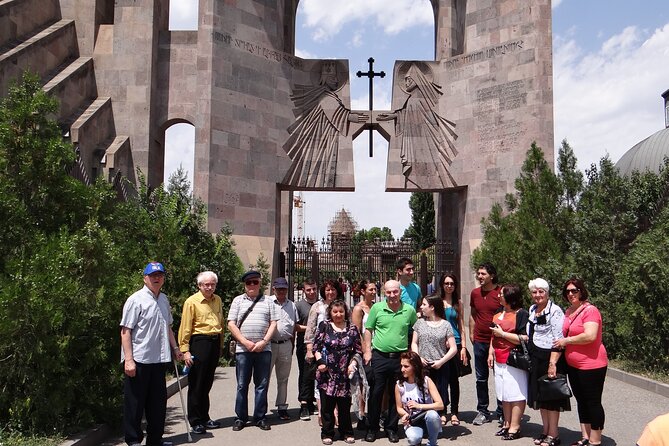
The first stop is Tsitsernakaberd, about 45 minutes. The memorial complex honors the victims of the Armenian Genocide and is built around a tall granite stele with twelve surrounding stone slabs.
The twelve slabs represent the twelve provinces of historic Western Armenia connected with the genocide. At the base, an eternal flame gives the memorial a quiet center. The design is direct and solemn rather than decorative.
You also have access to the genocide museum. The museum presents the history and atrocities of the genocide, so this is not a casual sightseeing stop. Give it your attention and expect the mood to change before the more celebratory parts of the day.
The time here is useful because a guide can provide context that a photograph cannot. Armenia’s modern identity is closely tied to remembrance, and Tsitsernakaberd helps you understand why national memory matters so much here.
If you prefer a light and easy morning, this opening may feel heavy. I would not rush it, though. Forty-five minutes gives you enough time to see the memorial and take in the museum without turning the visit into a quick checklist.
Saint Hripsime Church and the seventh-century stonework
Saint Hripsime Church is the next major stop, with about 30 minutes set aside. It dates from the seventh century and is one of the UNESCO-listed religious sites in Vagharshapat.
The church is linked with the story of Saint Hripsime and with Catholicos Komitas, whose role in Armenian church history is explained by the guide. The setting is more intimate than the grander Echmiadzin complex, which makes this a good place to focus on the structure itself.
You should listen for the explanation of how Armenian church design developed and why old religious buildings remain central to the country’s identity. The tour is not just about entering an old building, taking a picture, and leaving. The guide connects the church to Armenian beliefs and the people associated with its construction and preservation.
Thirty minutes is enough for an introduction, but not for a long, unhurried study of every architectural detail. If you are especially interested in church architecture, you may wish the stop were longer. For a first visit, the pace keeps the morning moving.
Saint Gayane Church is named in the tour overview as a third UNESCO-listed church and is described as part of the experience. However, the detailed stop-by-stop schedule lists Saint Hripsime and Echmiadzin but does not give Saint Gayane its own stop. Ask the operator to confirm whether Saint Gayane is included on your departure.
Echmiadzin, the heart of Armenian Christianity
Echmiadzin Monastery is the central religious stop. The name is often explained as Holy Descent or Holy Sea, and the site is home to the main cathedral of the Armenian Apostolic Church.
The cathedral is described as the most ancient Christian cathedral in the world. During this tour, restoration work means you can see the building from the outside, but the interior visit is replaced by time in the Echmiadzin museum.
That change matters. If your main goal is to walk inside the cathedral, you should know before paying that the current plan does not allow it. The museum offers a meaningful alternative, but it is a different kind of experience.
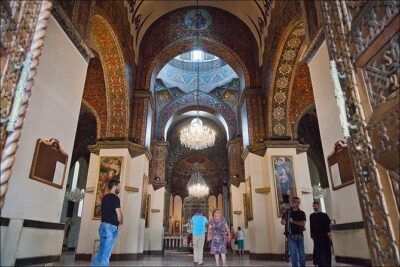
You will see sacred objects and relics, including a piece associated with Noah’s Ark and the Holy Lance. These objects carry major importance for Armenian Christianity, and a guide can explain their place in religious tradition better than a label alone.
The museum visit lasts about an hour, which is generous compared with the shorter church stop. I like that the schedule gives the collection real time instead of treating it as a quick substitute for the closed cathedral.
The title and main description also refer to Saint Gayane Church and Armenia’s conversion to Christianity, or as the supplied description puts it, conversion to Catholicism. Since the Armenian Apostolic Church is a distinct Christian tradition, you may want to ask your guide to clarify the religious terminology as the tour moves between sites.
A few more Yerevan days to weigh up
- Group Tour: Garni, Symphony of Stones, Geghard, Lavash Baking
★ 5.0 · 1,042 reviews - Group Tour: Lake Sevan (Sevanavank), Dilijan (Goshavank, Haghartsin)
★ 5.0 · 1,036 reviews - Group tour: Khor Virap, Noravank, Areni Winery and Cave
★ 5.0 · 651 reviews - Yerevan: Garni, Geghard, Symphony of Stones & Lavash Baking
★ 5.0 · 589 reviews
Why these churches matter beyond the photographs
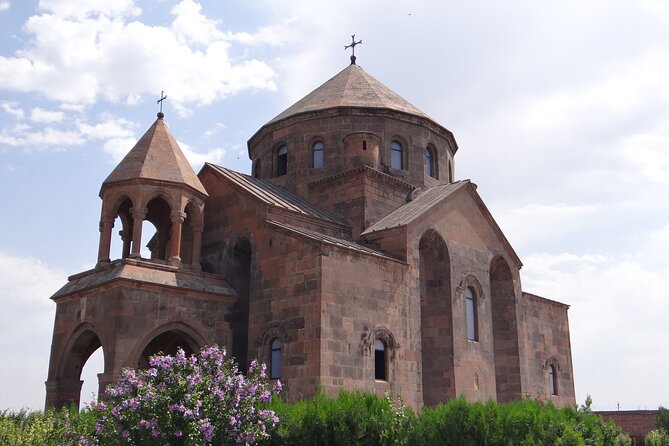
Armenia adopted Christianity early, and these churches are not simply old monuments scattered around Yerevan. They are active symbols of Armenian religious identity and part of the story of how Christianity shaped the country.
Saint Hripsime gives you an older church setting. Echmiadzin gives you the central cathedral complex and sacred museum objects. Saint Gayane, if included on your departure, adds another major Vagharshapat site to the sequence.
The strength of a guided visit is the connection between them. Without explanation, you may remember domes, stone walls, and courtyards. With a good guide, you can follow the links between saints, Catholicos Komitas, Armenian church leadership, and the country’s religious past.
Guide Nvard has been specifically praised for speaking English well, explaining the sites clearly, and helping a solo guest take photographs. I cannot promise that she will lead every departure, but if she is assigned to your group, you can expect a friendly, attentive style suited to a small group.
Noy Brandy Factory brings a different side of Armenia
The last major stop is Noy Yerevan Ararat Brandy-Wine-Vodka Factory. The factory dates to 1877 and is known for Armenian brandy made from locally sourced grapes and aged in oak barrels.
The visit is not just a shop stop. You receive a guided look at Armenian brandy production, followed by a tasting of port wine from 1941 and two types of brandy. That makes this a notable part of the tour, especially if you enjoy spirits or want to understand why Armenian brandy has an international reputation.
The tasting also changes the rhythm of the day. After memorials, monasteries, and relics, you get a practical look at a living local industry. Armenia’s identity is not only preserved in churches and museums. It is also expressed through food and drink traditions that continue today.
Use caution with the tasting if you are sensitive to alcohol. The tour includes alcoholic beverages, and the description does not specify nonalcoholic alternatives. Since you will likely be returning to Yerevan after the visit, the air-conditioned vehicle is a welcome feature.
The factory is described as exporting to more than 30 countries and as having won international awards. The useful part for you is not the awards list itself, but the chance to learn how grape distillation and long oak aging shape Armenian brandy.
Timing, transport, and group size
Pickup is offered, and the tour begins at 9:30 a.m. An air-conditioned vehicle is included, which matters because you are moving between Yerevan and Vagharshapat rather than staying in one compact district.
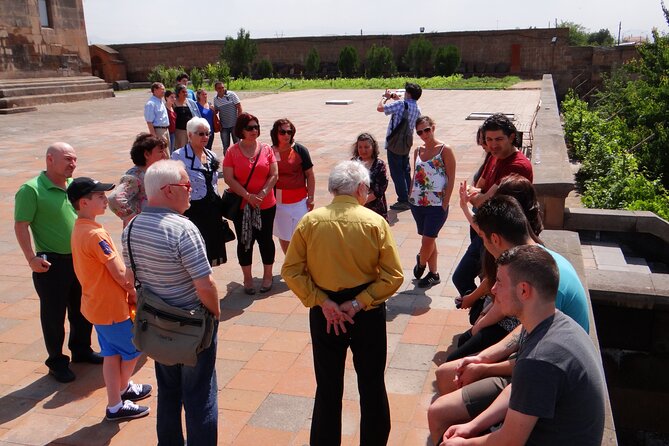
The maximum group size is 15 people. That is small enough for a guide to answer questions and help with practical needs, while still being larger than a private tour. If you prefer a completely personal schedule, this is not that product. If you want the efficiency of a shared outing without a large coach group, the limit is appealing.
Most people can participate, and service animals are allowed. The tour is also near public transportation, though the pickup option should make it unnecessary to organize the route yourself.
Plan for roughly four to five hours. The stated stop times add up to more than three hours before driving, transitions, and any meal. If lunch is added at $15 per person, allow extra time and confirm how it fits the schedule.
The tour includes mobile ticketing and confirmation within 48 hours, subject to availability. The cancellation policy is strict: the booking is non-refundable and cannot be changed. Only book once your date and plans are firm.
Who will get the most from this outing
I would choose this tour if you are staying in Yerevan and want one organized excursion covering national memory, Armenian Christianity, and brandy production.
It suits first-time visitors especially well because the guide supplies the context that ties the stops together. It also works for solo visitors, particularly if having a guide who can help with photographs is useful. Nvard’s reported approach suggests that the right guide can make a shared tour feel personal.
This may not be the best choice if you want a slow architectural study. The tour covers several important places, and the schedule keeps moving. The cathedral restoration is another consideration, since the interior is not currently part of the visit.
The experience also suits adults interested in wine and spirits, but the brandy tasting should not be the sole reason to book. The strongest part of the tour is the combination of memorial, churches, museum, and factory.
Should you book the Tsitsernakaberd and Echmiadzin tour?
Book it if you want a well-rounded introduction to Armenia outside Yerevan, with transport and a guide handling the connections. The memorial gives the day seriousness, the churches explain Armenia’s Christian identity, the museum adds rare religious objects, and Noy provides a taste of the country’s working traditions.
Before booking, confirm two points: whether Saint Gayane Church is included on your date, and whether the cathedral restoration schedule has changed. If you accept those limits, the $100 cost covers a useful range of admissions, transport, guiding, and tastings.
I would pass only if entering Echmiadzin Cathedral is essential to your plans, or if you dislike fixed schedules and group transport. For most first visits from Yerevan, this is a thoughtful way to see several important places in one morning and afternoon.
FAQ
Where does the tour start?
The tour starts at 9:30 a.m. in Yerevan, and pickup is offered.
How long does the tour last?
The experience lasts approximately five hours. Its main description refers to a four-hour tour, so the final duration may vary with driving and scheduling.
What sites are included?
The scheduled stops include Tsitsernakaberd, Saint Hripsime Church, Echmiadzin Monastery and museum, and Noy Yerevan Ararat Brandy-Wine-Vodka Factory.
Is Saint Gayane Church included?
Saint Gayane Church is named in the tour description as one of the UNESCO-listed sites, but it does not appear as a separate stop in the detailed schedule. Confirm this with the provider before booking.
Can I enter Echmiadzin Cathedral?
The cathedral is currently under restoration, so the visit is planned from the outside. You visit the Echmiadzin museum instead.
What can I see at the Echmiadzin museum?
The museum includes religious relics, including a piece associated with Noah’s Ark and the Holy Lance.
Is alcohol included?
Yes. The tour includes port wine from 1941 and tastings of two types of brandy at Noy Brandy Factory.
Is lunch included?
No. Lunch is not included, but it can be provided for $15 per person if required.
How large is the group?
The tour has a maximum of 15 people. An air-conditioned vehicle and a local guide are included.
Newly listed around Yerevan
- Private Yerevan City Tour with museums★ 5.0 · 5 reviews
- Amazing Yerevan★ 5.0 · 7 reviews
- Wine Trip in Yerevan★ 5.0 · 3 reviews
- Vayots Dzor Areni Wine Route★ 3.5 · 3 reviews
- Group Tour: Tsaghkadzor (Kecharis,Ropeway), Lake Sevan, Trout BBQ★ 5.0 · 7 reviews
- Mountaintop Eats★ 5.0 · 7 reviews
- Garni Gorge and Azat Reservoir OFF ROAD Tour & Water Sports★ 5.0 · 6 reviews
- Private tour to Sevan, Dilijan Off-road tour & Horseback riding★ 4.5 · 5 reviews
Echmiadzin Cathedral Tours, compared.
Echmiadzin Cathedral & churches, Zvartnots Temple
Read our review →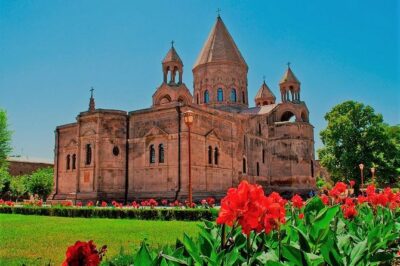
Private Half-day Echmiadzin Cathedral, Hripsime & Zvartnots Temple from Yerevan
Read our review →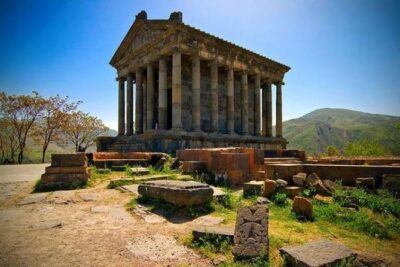
Private tour to Echmiadzin (st Cathedral), Zvartnots, Khor Virap, Garni, Geghard
Read our review →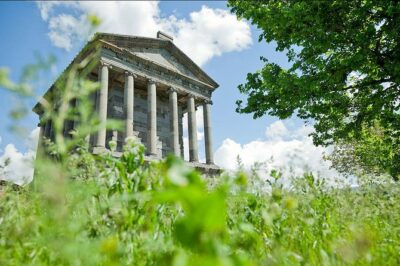
Private 8-9-hour Echmiadzin, Zvartnots, Garni and Geghard trip from Yerevan
Read our review →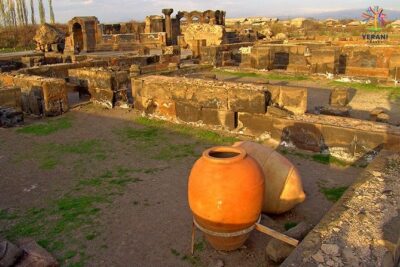
Khor Virap, Echmiadzin & Zvartnots UNESCO Small-Group Guided Tour
Read our review →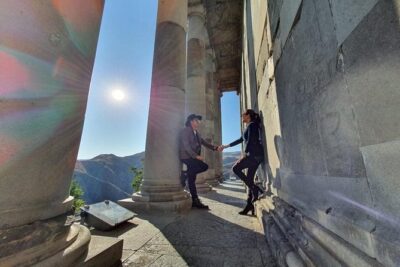
Garni, Geghard, Echmiadzin and Zvartnots Private Tour
Read our review →
Khor Virap, Echmiadzin Cathedral and Zvartnots Private Tour
Read our review →
Private Tour to Echmiadzin,St.Hripsime & Gayane Churches, Zvartnots Temple
Read our review →Browse the lists this tour appears in