
Reviewed · ECHMIADZIN CATHEDRAL TOURS
Group Tour: Echmiadzin Cathedral & churches, Zvartnots Temple
Echmiadzin and Zvartnots give you Armenia’s early Christian story in one compact outing. You’ll see churches still used for worship, a cathedral founded in the fourth century, and the bold remains of a seventh-century temple with Mount Ararat often visible behind it. I especially like the excellent value at $25 and the fact that entrance fees, transport, water, and pastries are covered.
I also like the mix of active religious sites and open-air ruins. Guides such as Marina, Manya, Arpi, Karen, Gayane, and Tigran have been praised for clear explanations and friendly help. The main caution is the bilingual group format: English and Russian commentary is given consecutively, and a group of up to 49 people can make the tour feel hurried.
Key points to know before you book
- Four major religious sites in four to five hours: Saint Hripsime, Saint Gayane, Echmiadzin Cathedral, and Zvartnots Temple form a tight, worthwhile route.
- A fourth-century cathedral anchors the day: Echmiadzin is the center of the Armenian Apostolic Church and one of the oldest Christian churches in the world.
- Zvartnots is the visual highlight: The ruined circular temple is especially striking with Mount Ararat in the distance.
- English and Russian are combined: The guide explains each stop in both languages, which can reduce free time for photographs and questions.
- No regular lunch break: Eat before departure or bring something more substantial than the included pastries.
- Sunday has a special reward and a practical drawback: You may see liturgy, but the churches can be crowded.
Why this half-day route matters
If you have only a short stay in Yerevan, this is one of the easiest ways to reach Armenia’s most important early Christian sites. The journey is short enough to fit around a morning or afternoon in the capital, yet the subject is substantial: Armenia adopted Christianity in the early fourth century, and these churches show how that faith shaped the country’s architecture, politics, and daily life.
The tour begins and ends at Hyur Service on Nalbandyan Street in central Yerevan. There is no hotel pick-up or drop-off, so you need to reach the meeting point yourself. The office is near public transportation, and the activity uses air-conditioned vehicles with WiFi and passenger insurance.
The price is unusually reasonable for what is included. At $25, you receive a guide, transport, admission tickets, bottled water, pastries, and vehicle insurance. You are paying for a group outing rather than a private guide, so the trade-off is clear: strong sightseeing value, less control over the pace.
The group can reach 49 people. That matters most at the churches, where it may be harder to hear if you drift toward the back. One poor experience described a crowded group and no microphone, while many other visitors found the guides organized and clear. I would stay close to the guide and avoid wandering far during explanations.
More Zvartnots ruins visits:
Saint Hripsime Church and the beauty of restraint
Saint Hripsime is often the first major stop, with about 30 minutes to look around. It is one of Armenia’s finest examples of a cross-cupola church, a design built around a central dome and four arms.
The building is not covered in decorative excess. Its appeal comes from clean lines, heavy stone, and a sense of height. The simplicity is deliberate, and the church feels strong rather than delicate. Inside, you can see the tomb of Saint Hripsime, a Christian martyr whose story is closely tied to Armenia’s conversion.
This is also one of the UNESCO-listed sites connected with Echmiadzin. The UNESCO designation is useful context, but the church does not need a plaque to make an impression. Its form explains why Armenian church architecture is so distinctive.
Thirty minutes is enough for a guided introduction and a quick look around. It may feel short if you want quiet time, detailed photographs, or a private moment inside. Dress respectfully, since these are functioning religious places, not simply monuments.
Saint Gayane beneath Mount Ararat
Saint Gayane Church is nearby and receives another 30-minute visit. It dates from the seventh century and is built in a domed-basilica style, which gives it a slightly different shape and feel from Saint Hripsime.
The church is dedicated to Saint Gayane, said to have been martyred for preaching Christianity. Its position can be especially memorable when the white peaks of Mount Ararat appear behind the dome. The mountain is politically outside modern Armenia, but it remains one of the central images of Armenian identity.
This stop rewards you for looking beyond the doorway. Take a moment to view the church from outside, where the dome, stone walls, and distant mountain can come together in one photograph. Still, weather controls the view. The mountain may be hidden by cloud, haze, or poor visibility, so treat it as a bonus rather than a promise.
The two church stops can begin to feel similar if you are not listening for the architectural differences. A good guide makes the distinction clear. Several guides have been singled out for giving useful background while keeping the group moving, which is important on a compact tour like this.
Echmiadzin Cathedral, the center of Armenian Christianity
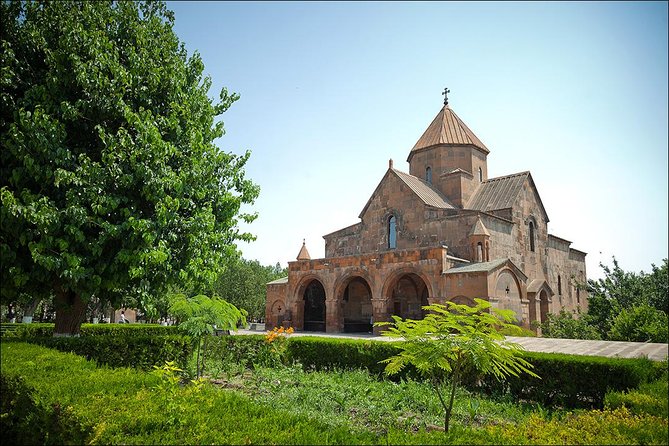
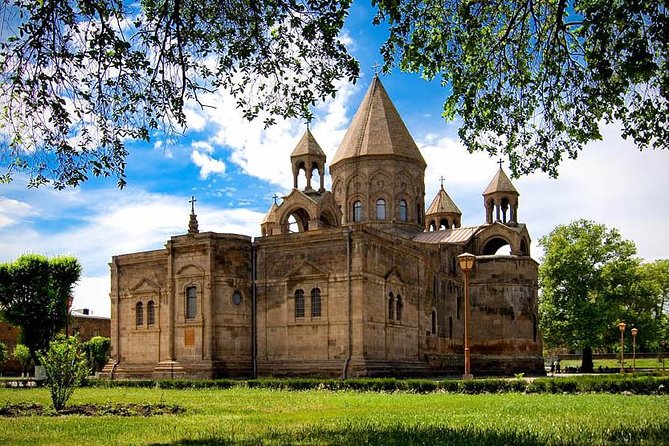
The main stop is Echmiadzin Monastery, with about one hour allotted. The cathedral was founded at the beginning of the fourth century and serves as the center of the Armenian Apostolic Church. According to tradition, Gregory the Illuminator saw an apparition of Jesus Christ in a dream and founded the church on that spot.
That story gives the building its spiritual importance, but the setting also has institutional weight. The residence of the Catholicos and the Theological Academy are near the cathedral. You are seeing a living center of Armenian Christianity, not just an old stone church.
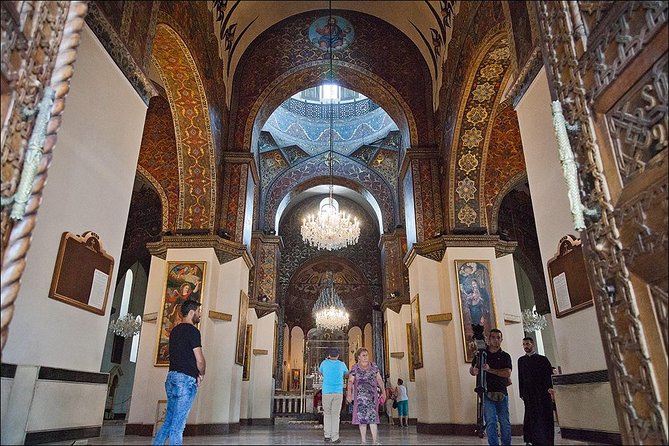
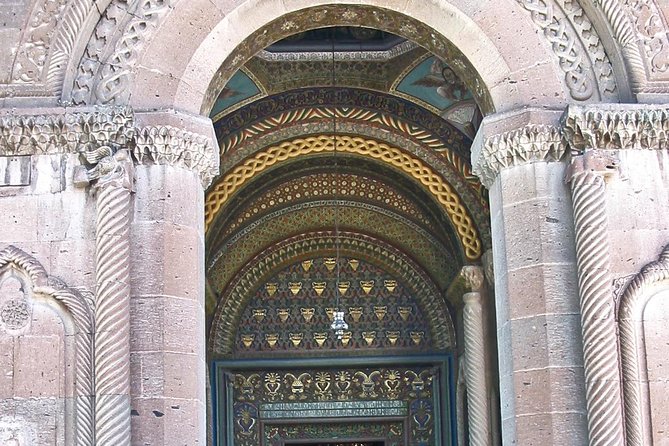
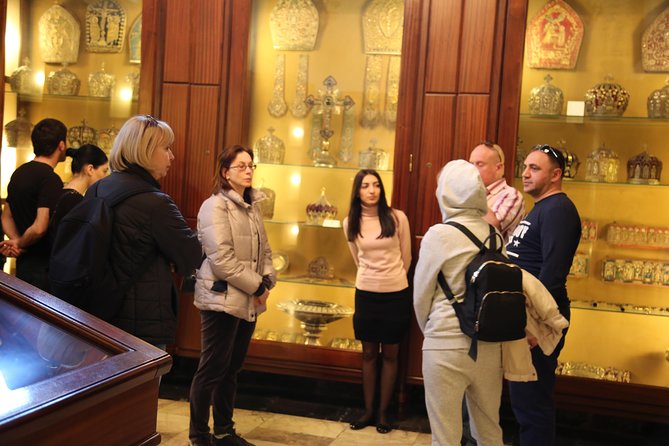
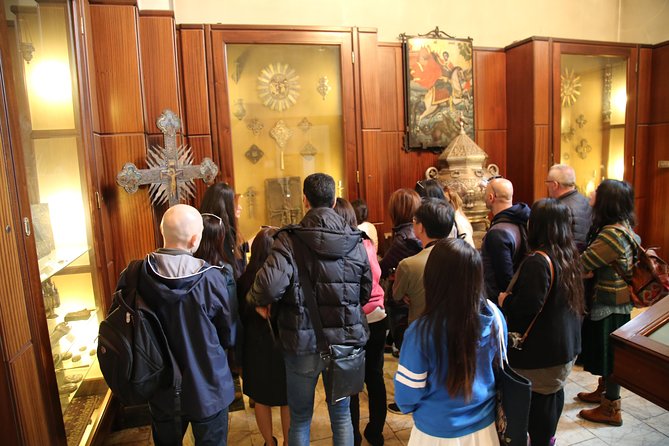
Inside, the cathedral is decorated with frescoes created by members of the Hovnatanyan family. The interior is worth careful attention, especially if your guide explains how the decoration fits into Armenian church life. A separate treasury visit may also be offered by cathedral staff, and one visitor described that experience as excellent. The supplied details do not guarantee that the treasury visit is part of every departure, so consider it an optional addition rather than a fixed promise.
One hour is the right amount of time for the cathedral itself, the grounds, and a guided explanation. If you want a long, silent visit, it will not be enough. The tour is designed to introduce you to the place, not let you study every fresco at leisure.
On Sundays, there may be a chance to attend liturgy. That can be the most authentic moment of the day, but Sunday also brings larger crowds. You may have less room to move and fewer chances for uninterrupted photographs. Choose Sunday for worship and atmosphere, not for a quiet architectural inspection.
More Echmiadzin cathedral trips:
- Khor Virap, Echmiadzin & Zvartnots UNESCO Small-Group Guided Tour
★ 5.0 · 40 reviews - Garni, Geghard, Echmiadzin and Zvartnots Private Tour
★ 5.0 · 23 reviews - Khor Virap, Echmiadzin Cathedral and Zvartnots Private Tour
★ 4.5 · 20 reviews - Private Tour to Echmiadzin,St.Hripsime & Gayane Churches, Zvartnots Temple
★ 5.0 · 17 reviews
Zvartnots Temple, the boldest stop of the day
Zvartnots is the final major site and usually receives about 45 minutes. This is an archaeological ruin rather than a complete church, but it is often the most visually powerful stop.
The temple was built in the seventh century on several columns and survived until roughly the tenth century. Its design was ambitious, and the reconstruction model proposed by Armenian architect Toros Toramanyan was once difficult for specialists to accept. The ruins seemed too complex and grand for the period.
Evidence later helped support his vision. A bas-relief at Sainte-Chapelle in Paris depicts Zvartnots with Noah’s Ark, and its form resembles Toramanyan’s reconstruction. That detail gives the site an unusual connection to France and helps you picture the scale of the lost building.
Today, you see columns, carved stone, and the remains of a structure that once rose in a circular, multi-level form. The open setting makes it easier to understand the architecture than it would be inside a complete church. Look for the surviving carvings and imagine the dome and upper levels rising above them.
Zvartnots is also UNESCO-listed. It is the place where you are most likely to want extra time for photographs, especially if Mount Ararat is visible. Forty-five minutes is enough for an introduction and a good walk around, but not for a slow archaeological study.
The bilingual guide format is the key trade-off
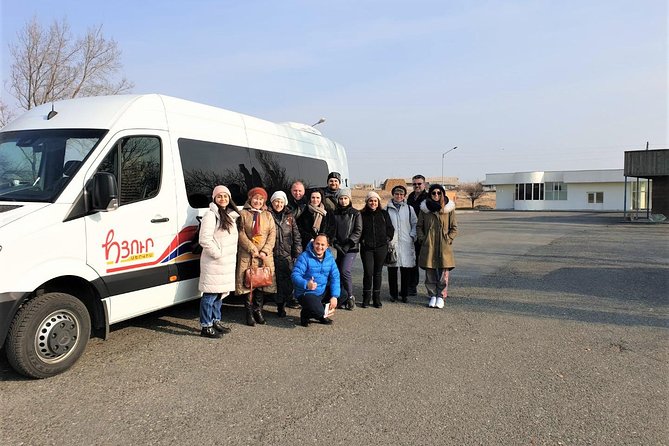
The guide works in English and Russian consecutively. This makes the tour available to more people, but it doubles the spoken commentary. If the group is large, explanations can take longer while your time at each site stays the same.
Some guides have handled this arrangement very well. Marina was praised for balancing the two languages, and Manya was noted for managing both groups while giving clear explanations. Gayane was also praised for strong English and Russian and for keeping enough time for each stop.
The format is not always smooth. A few visitors felt that too much time was spent repeating information, leaving less room for questions and photographs. One person also reported confusion when part of the group moved on while another language group was still being addressed.
My practical advice is simple: ask at the start how the two language groups will be organized, then stay close to your assigned guide. If you want a quiet, detailed experience in one language, a private tour would suit you better. If you want an affordable introduction and can accept shared time, the group format works well.
Transport, timing, and what to eat

The tour lasts about four to five hours, including the drives between Yerevan and the sites. The vehicle is air-conditioned, and WiFi is included. Most people can take part, but seats are not assigned or known in advance.
The day moves quickly. You will have roughly 30 minutes at each of the first two churches, one hour at Echmiadzin, and 45 minutes at Zvartnots, with travel time between them. That structure keeps the outing efficient, but it leaves little room for delays.
Water and pastries are included, which is a pleasant touch. They are not a replacement for lunch. There is no regular lunch stop, so I would eat before departure or bring a sandwich and extra snacks. During the holiday period from December 25 through January 7, lunch is paid on the spot and costs about $10 to $12, according to the tour details.
Wear shoes suitable for walking around church grounds and ruins. The outing operates in all weather, so dress for the forecast. Some areas may be exposed, especially at Zvartnots, and a sunny day can feel very different from a cold or wet one.
Who will get the most from this tour
I would recommend this outing to a first-time visitor who wants a clear introduction to Armenian religious architecture without arranging a car, driver, and guide separately. It also suits anyone with only a half-day free in Yerevan.
The tour is a good match for:
- People interested in early Christianity and Armenian history
- Visitors who want UNESCO-listed sites outside the capital
- Budget-conscious visitors who value included entrance fees
- Families, provided children are accompanied by an adult
- Anyone who prefers a planned route to independent transport
It is less suitable if you need long stretches of quiet, want to set your own pace, or dislike bilingual commentary. The large maximum group size can also bother photographers and people who prefer small-group touring.
Booking details and cancellation
The tour is offered in English, with Russian commentary included consecutively. Confirmation is provided at booking, and the activity ends back at the Hyur Service meeting point.
You can cancel for a full refund up to 24 hours before the local start time. Changes or cancellations made less than 24 hours before departure are not accepted for a refund. The tour is often booked around 18 days ahead, so reserving earlier is sensible during busy periods.
Should you book the Echmiadzin and Zvartnots tour?
Yes, if you want the most efficient introduction to Armenia’s early Christian sites from Yerevan. The combination is strong: Saint Hripsime for architectural purity, Saint Gayane for its setting and seventh-century form, Echmiadzin for spiritual importance, and Zvartnots for dramatic ruins and the chance of Mount Ararat views.
Book it with realistic expectations. You are joining a large group, listening in two languages, and moving on a fixed schedule. Eat first, stay near the guide, and choose a weekday if you want fewer crowds. Choose Sunday if attending liturgy matters more than having a quiet visit.
At $25, the tour offers a lot for a half-day. It is not the final word on Armenia’s churches, but it is a practical first chapter and a smart use of limited time in Yerevan.
FAQ
How much does the tour cost?
The listed price is $25 per person.
How long does the tour last?
The tour lasts approximately four to five hours.
Where does the tour start?
It starts at Hyur Service, 96 Nalbandyan Street, Yerevan 0010, Armenia.
Where does the tour finish?
The activity ends back at the Hyur Service meeting point.
Is hotel pick-up included?
No. Hotel pick-up and drop-off are not included.
What languages are used on the tour?
The professional guide provides commentary in English and Russian consecutively.
Are entrance fees included?
Yes. Admission tickets for the included sites are covered.
Is lunch included?
A regular lunch stop is not included. During the holiday period from December 25 through January 7, lunch costs about $10 to $12 and is paid on the spot.
Are snacks and drinks provided?
Yes. Bottled water and pastries are included.
Can I attend a church service?
On Sundays, there is a chance to participate in liturgy, although this is not guaranteed.
How large can the group be?
The tour can have a maximum of 49 people.
What is the cancellation policy?
You can cancel at least 24 hours before the start time for a full refund. Cancellations or changes made less than 24 hours before the start time are not accepted.
Newly listed around Yerevan
- Private Yerevan City Tour with museums★ 5.0 · 5 reviews
- Amazing Yerevan★ 5.0 · 7 reviews
- Wine Trip in Yerevan★ 5.0 · 3 reviews
- Vayots Dzor Areni Wine Route★ 3.5 · 3 reviews
- Group Tour: Tsaghkadzor (Kecharis,Ropeway), Lake Sevan, Trout BBQ★ 5.0 · 7 reviews
- Mountaintop Eats★ 5.0 · 7 reviews
- Garni Gorge and Azat Reservoir OFF ROAD Tour & Water Sports★ 5.0 · 6 reviews
- Private tour to Sevan, Dilijan Off-road tour & Horseback riding★ 4.5 · 5 reviews
Echmiadzin Cathedral Tours, compared.
Private Half-day Echmiadzin Cathedral, Hripsime & Zvartnots Temple from Yerevan
Read our review →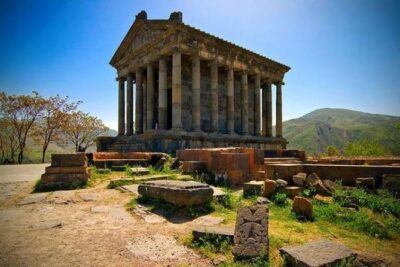
Private tour to Echmiadzin (st Cathedral), Zvartnots, Khor Virap, Garni, Geghard
Read our review →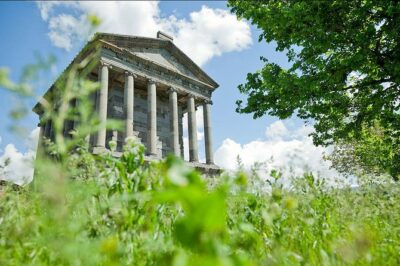
Private 8-9-hour Echmiadzin, Zvartnots, Garni and Geghard trip from Yerevan
Read our review →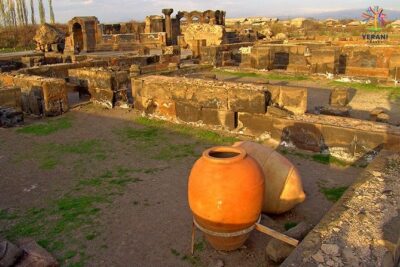
Khor Virap, Echmiadzin & Zvartnots UNESCO Small-Group Guided Tour
Read our review →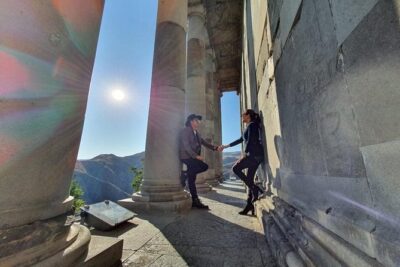
Garni, Geghard, Echmiadzin and Zvartnots Private Tour
Read our review →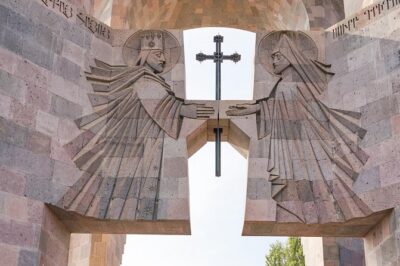
Khor Virap, Echmiadzin Cathedral and Zvartnots Private Tour
Read our review →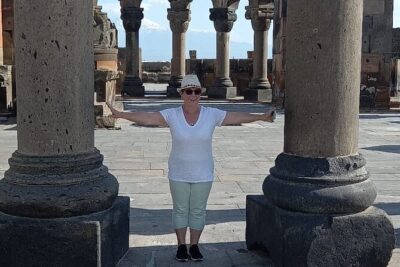
Private Tour to Echmiadzin,St.Hripsime & Gayane Churches, Zvartnots Temple
Read our review →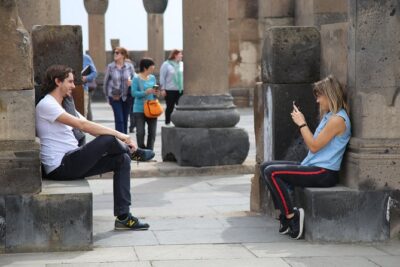
Private tour to UNESCO heritage Echmiadzin churches, Zvartnots and Sardarapat
Read our review →Browse the lists this tour appears in