
Reviewed · ECHMIADZIN CATHEDRAL TOURS
Echmiadzin (Hripsime, Gayane, Mother Cathedral) and Zvartnots Temple
Armenia’s spiritual center is only a short trip from Yerevan, yet the setting feels far removed from the capital. This tour links Echmiadzin’s working religious complex with the quiet ruins of Zvartnots, giving you both living faith and ancient stonework in one half-day outing.
I like the clear historical thread: Saint Hripsime and Saint Gayane help explain Armenia’s early Christian story, while Echmiadzin Cathedral shows that tradition still alive today. I also like the price, $20 per person, which makes this an easy way to reach several important sites without arranging separate transport.
The main consideration is timing. Four to five hours gives you a useful introduction, but not a leisurely study of every carving and museum display. The tour has a maximum of 49 people, and one past booking was cancelled only 10 hours before departure, so I would keep your plans flexible and confirm the departure carefully.
Key points to know before you book
- Four UNESCO-connected Armenian sites in one outing: Saint Hripsime, Saint Gayane, Echmiadzin Cathedral, and Zvartnots all belong to Armenia’s most important Christian heritage area.
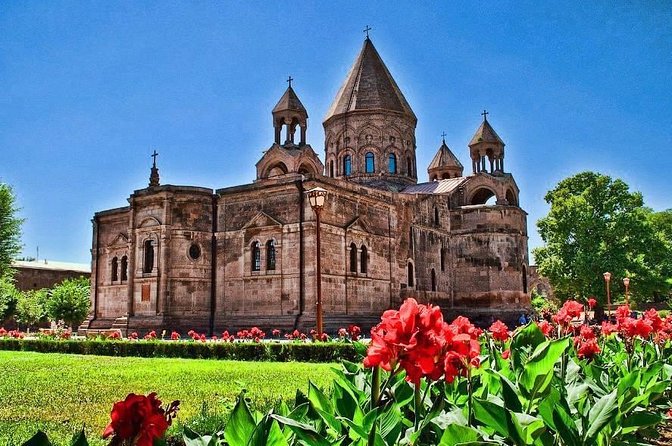
- A working cathedral and a ruined masterpiece: You see Echmiadzin as the mother church of the Armenian Apostolic Church, then compare it with the remains of seventh-century Zvartnots.
- A strong value at $20: Bottled water, a local guide, a professional guide, and admission to Zvartnots are included.
- A Sunday visit may feel especially meaningful: A religious ceremony can take place at Echmiadzin on Sundays.
- Simple city-center departure: The tour starts and ends at Republic Square at 10:00 a.m.
- Bring your own lunch plan: Lunch is not included, and the schedule does not list a dedicated meal stop.
Why Echmiadzin and Zvartnots belong together
This is not simply a church tour. It is a compact lesson in how Armenian Christianity shaped architecture, politics, and daily life.
Armenia became the first nation to adopt Christianity as its state religion, traditionally dated to 301. Echmiadzin grew into the center of that faith, while Zvartnots later expressed the confidence and ambition of Armenian church builders in a very different form.
You begin with churches that remain tied to worship and religious identity. You finish among the remains of a cathedral that once had a circular, three-tiered design influenced by both Byzantine and Armenian ideas. The contrast is the tour’s greatest strength.
I would recommend paying attention to the order of the stops. Saint Hripsime and Saint Gayane are not random old churches placed along a sightseeing route. Their stories connect to the Christian virgins who fled the Roman Empire with Saint Hripsime. That human story gives the stone buildings a clearer meaning before you reach Echmiadzin.
More Zvartnots ruins visits:
- Group Tour: Echmiadzin Cathedral & churches, Zvartnots Temple
★ 5.0 · 352 reviews - Private Half-day Echmiadzin Cathedral, Hripsime & Zvartnots Temple from Yerevan
★ 5.0 · 95 reviews - Private tour to Echmiadzin (st Cathedral), Zvartnots, Khor Virap, Garni, Geghard
★ 5.0 · 67 reviews
Starting at Republic Square at 10:00 a.m.
The meeting point is Republic Square in central Yerevan, at location 5GH7+33C. The tour returns to the same place, so you do not need to arrange a separate return transfer.
The stated start time is 10:00 a.m., and the full outing lasts about four to five hours. That makes it manageable alongside an afternoon in Yerevan, though you should not expect a long, slow-paced archaeological visit at every stop.
The tour has a maximum of 49 participants. That is a fairly large possible group, especially at the upper limit, so the experience may feel more like an organized excursion than a private cultural walk. The upside is the low price and the convenience of shared transport. The tradeoff is that you may have less time for individual questions or quiet viewing.
A local guide and a professional guide are included. The strongest part of the experience, based on the available information, is the explanation of the sites and their religious setting. Make a note of questions as you go, since the schedule gives each church roughly 30 minutes and Echmiadzin about an hour.
Saint Hripsime and the shape of Armenian church design
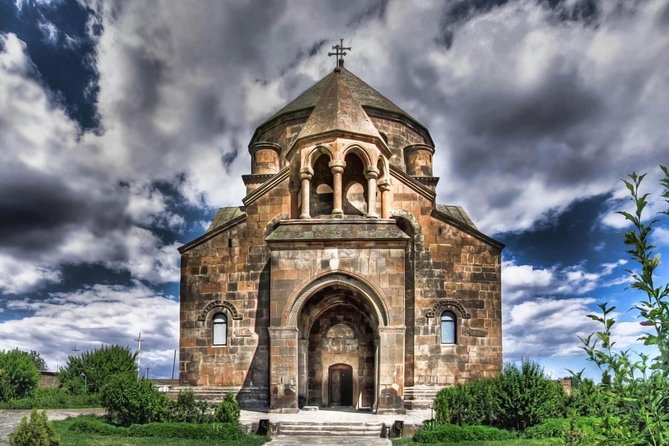
Saint Hripsime is the first major stop and receives about 30 minutes. It is a UNESCO World Heritage Site, known for its classic Armenian cruciform plan, central dome, and heavy stone walls.
The cruciform design is easy to spot. The building is organized around a cross-shaped plan, but the effect is not light or delicate. Thick stone walls and the dome give the church a compact, sturdy appearance. This is a good place to start because the basic features of Armenian ecclesiastical architecture are clear here.
I would use the visit to look upward and outward rather than only at the altar area. Notice how the dome organizes the interior and how the mass of the walls shapes the mood. Your guide can add the story of Saint Hripsime, one of the Christian virgins associated with Armenia’s conversion.
Thirty minutes is enough for an introduction, photographs, and a short explanation. It is not enough for a detailed architectural study, especially if the group is large. If you care about design, stay focused and avoid spending the whole stop taking pictures from the entrance.
Saint Gayane and a connected Christian story
Saint Gayane is also allocated about 30 minutes. It has a rectangular basilica design, a dome, massive stone walls, and carved arches.
Its architectural character differs from Saint Hripsime, so visiting both in sequence helps you compare them. At Saint Gayane, look for the way the rectangular basilica form works with the dome and the carved arches. The church’s structure feels more extended than the compact cruciform design at Saint Hripsime.
Saint Gayane was one of the Christian virgins who fled the Roman Empire with Saint Hripsime. That link gives the two stops a shared narrative instead of making them feel like separate monuments on a checklist.
For you, the value here is context. A guide can explain why these churches matter beyond their age, and why the same figures appear in Armenia’s religious tradition. The short stop works well if you listen closely to the story. It may feel rushed if you want long periods of silence or close inspection of every carved detail.
More Echmiadzin cathedral trips:
- Private 8-9-hour Echmiadzin, Zvartnots, Garni and Geghard trip from Yerevan
★ 5.0 · 62 reviews - Khor Virap, Echmiadzin & Zvartnots UNESCO Small-Group Guided Tour
★ 5.0 · 40 reviews - Garni, Geghard, Echmiadzin and Zvartnots Private Tour
★ 5.0 · 23 reviews - Khor Virap, Echmiadzin Cathedral and Zvartnots Private Tour
★ 4.5 · 20 reviews
Echmiadzin Cathedral, Armenia’s mother church
The tour then spends about an hour at Echmiadzin Monastery in Vagharshapat. This is the central stop, and it deserves the extra time.
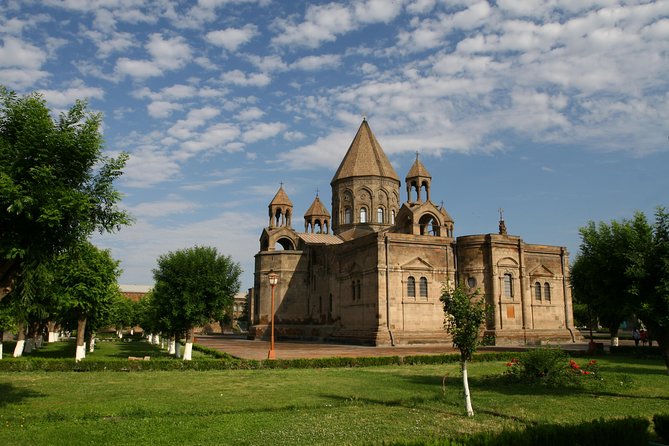
Echmiadzin Cathedral is the mother church of the Armenian Apostolic Church and one of the oldest cathedrals in the world. It was built in 301 to 303 by Saint Gregory the Illuminator, after Armenia adopted Christianity as its state religion.
That date gives the place its force. You are not looking at a church that merely recalls an old religious tradition. You are visiting the center of a church that has shaped Armenian identity for centuries.
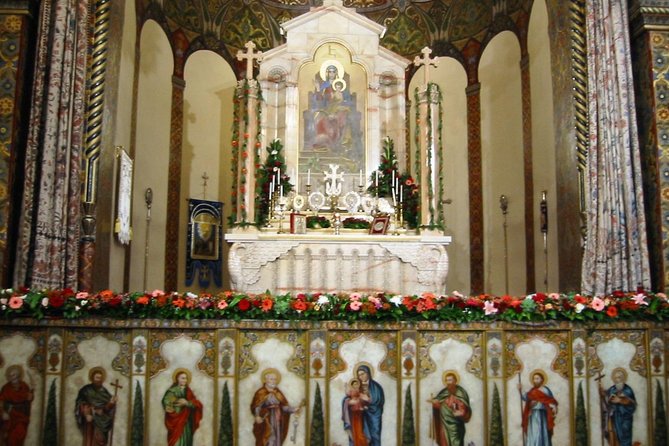
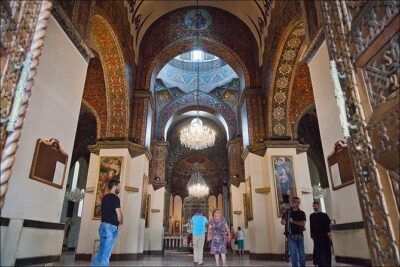
The cathedral has undergone recent renovation, and the interior was described as especially beautiful after the work. That makes the inside worth your attention, not just the exterior stone walls. Since the complex remains an active religious center, the atmosphere can differ depending on the day and any services taking place.
Sunday can be a particularly meaningful time to visit because a religious ceremony may be underway. That can add a genuine sense of living faith, but it also means you should act respectfully, follow instructions, and avoid treating the service as a performance.
I like the way this stop balances history with present-day practice. You can hear about Armenia’s early conversion to Christianity, then see the cathedral still functioning as the symbolic center of the Armenian Apostolic Church.
The hour should give you time to listen, walk through the grounds, and take in the main building without the same pressure as the two shorter church stops. Still, the tour does not promise a full museum visit or an extended study of the complex. If Echmiadzin is your main reason for booking, stay close to the guide and use the available hour well.
Zvartnots Temple and its unusual circular design
The final major stop is Zvartnots Temple, with about 45 minutes allocated for the visit. Admission is included.
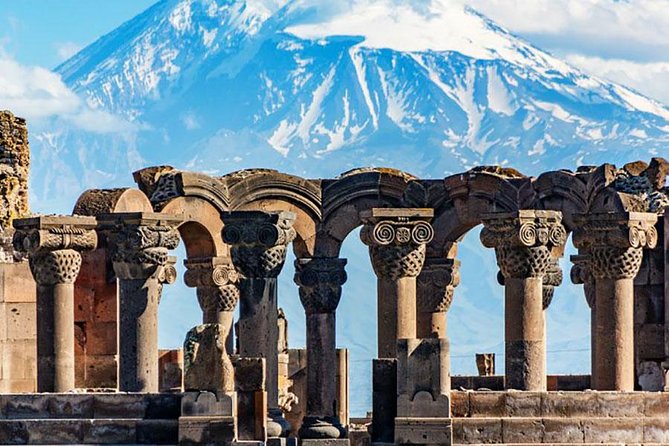
Zvartnots was a seventh-century cathedral, but it now survives as a ruin. Its remains are valuable because the original structure was unlike the more familiar Armenian church forms seen earlier in the day. Zvartnots had a circular, three-tiered plan, shaped by both Byzantine and Armenian design ideas.
That unusual layout is the reason to visit. Instead of entering a complete church and reading its form from the inside, you reconstruct the building from foundations, columns, and carved stone remains. The experience asks you to use your imagination, but the surviving details make the scale and ambition easier to grasp.
The site also offers views toward Mount Ararat. The mountain is an important visual and cultural reference for Armenia, and the open setting gives you a different experience from the enclosed churches at Echmiadzin.
Forty-five minutes is a sensible amount of time for the ruins. You can walk around the remains, study the stonework, listen to the guide, and take photographs without needing a full archaeological day. Weather and light may affect how much you enjoy the open site, but no special conditions are provided in the tour details, so plan for an outdoor stop.
Zvartnots is also where the tour’s architectural comparison comes together. Saint Hripsime offers a cruciform church, Saint Gayane a basilica with a dome, Echmiadzin a continuing religious center, and Zvartnots a circular cathedral remembered through its ruins.
What the $20 price really covers
At $20 per person, this is an inexpensive way to see four major sites outside central Yerevan. The price includes bottled water, a local guide, a professional guide, and admission to Zvartnots.
The value is strongest if you want convenience. You meet in Republic Square, visit several sites in one morning and early afternoon, and return to the same point. Organizing separate transport to Vagharshapat and Zvartnots could take more time and planning.
The price does not include lunch. The tour lasts four to five hours, so you may finish around the middle of the afternoon depending on the exact pace. Eat before departure or carry something if you need a meal at a fixed time. Do not assume the schedule includes a restaurant break.
The low cost also comes with limits. A group of up to 49 people can make the day less personal, and the time at each site is fixed. You are paying for broad coverage, basic comfort, guiding, and transport rather than a private specialist tour.
Who will get the most from this half-day visit
This experience suits you if you want a first look at Armenia’s Christian heritage without giving up a full day in Yerevan. It is especially useful for history fans, architecture enthusiasts, culture-focused visitors, and anyone interested in the country’s early adoption of Christianity.
Families can also consider it, since children must be accompanied by an adult and most people can participate. The churches and ruins provide variety, which may help younger visitors stay interested, though the religious and historical explanations require some attention.
You may want a different format if you prefer long museum visits, extensive photography time, or a private guide. The schedule is built around several stops, so its strength is range rather than slow exploration.
The available published rating is 4.2 from five ratings, which is a small sample. The strongest themes are informative guiding, a clean and comfortable car, and the appeal of combining churches, history, and culture in one outing. One serious service problem is also recorded: a departure was cancelled by Tatev Travel Agency 10 hours before the start, followed by another cancellation the next day. That does not define every booking, but it is a sensible reason to confirm your tour and avoid placing an important same-day connection immediately afterward.
Free cancellation is available if you cancel at least 24 hours before the start time. Changes or cancellations inside that window are not accepted for a refund.
Should you book this Echmiadzin tour?
Book it if you want an affordable, efficient introduction to Armenia’s religious center and nearby monuments. The combination of Saint Hripsime, Saint Gayane, Echmiadzin Cathedral, and Zvartnots gives you more than one style of church and more than one period of Armenian history.
I would especially choose it for a first visit to Yerevan, a Sunday when a ceremony may be taking place, or a trip where you want a guided route without spending a full day away from the capital.
Think twice if your schedule cannot absorb a possible late cancellation, or if you need a private and highly flexible visit. For most people, though, the $20 price makes this a practical way to reach four important sites, hear the Christian story behind them, and see how Armenia’s sacred architecture changed from working churches to a remarkable ruined cathedral.
FAQ
Where does the tour start and end?
It starts at Republic Square in Yerevan, at 5GH7+33C, and ends back at the same meeting point.
What time does the tour begin?
The stated start time is 10:00 a.m.
How long does the experience last?
The tour lasts approximately four to five hours.
Which sites are visited?
The route includes Saint Hripsime Church, Saint Gayane Church, Echmiadzin Monastery and Cathedral, and Zvartnots Temple.
Is admission included?
Admission to Zvartnots Temple is included. The other listed stops have free admission.
Is lunch included?
No. Lunch is not included in the tour price.
Is bottled water provided?
Yes. Bottled water is included.
How many people can join the tour?
The activity has a maximum capacity of 49 travelers.
Newly listed around Yerevan
- Amazing Yerevan★ 5.0 · 7 reviews
- Wine Trip in Yerevan★ 5.0 · 3 reviews
- Private Yerevan City Tour with museums★ 5.0 · 5 reviews
- Vayots Dzor Areni Wine Route★ 3.5 · 3 reviews
- Group Tour: Tsaghkadzor (Kecharis,Ropeway), Lake Sevan, Trout BBQ★ 5.0 · 7 reviews
- Mountaintop Eats★ 5.0 · 7 reviews
- Private tour to Sevan, Dilijan Off-road tour & Horseback riding★ 4.5 · 5 reviews
- Garni Gorge and Azat Reservoir OFF ROAD Tour & Water Sports★ 5.0 · 6 reviews
Echmiadzin Cathedral Tours, compared.
Echmiadzin Cathedral & churches, Zvartnots Temple
Read our review →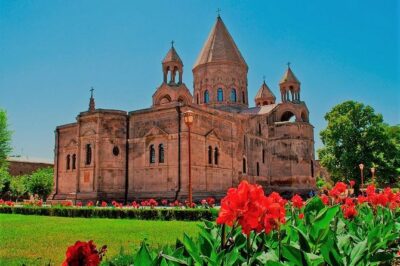
Private Half-day Echmiadzin Cathedral, Hripsime & Zvartnots Temple from Yerevan
Read our review →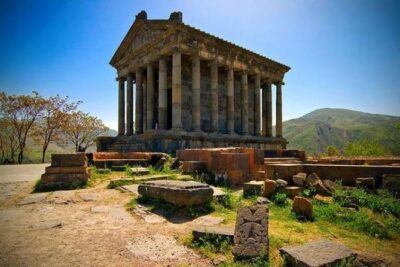
Private tour to Echmiadzin (st Cathedral), Zvartnots, Khor Virap, Garni, Geghard
Read our review →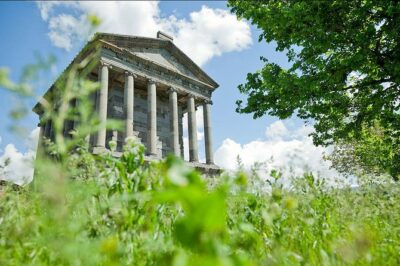
Private 8-9-hour Echmiadzin, Zvartnots, Garni and Geghard trip from Yerevan
Read our review →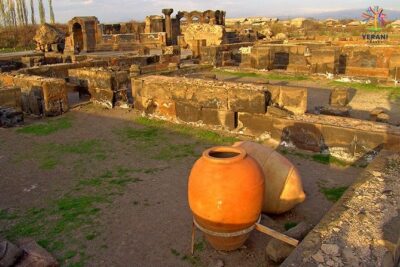
Khor Virap, Echmiadzin & Zvartnots UNESCO Small-Group Guided Tour
Read our review →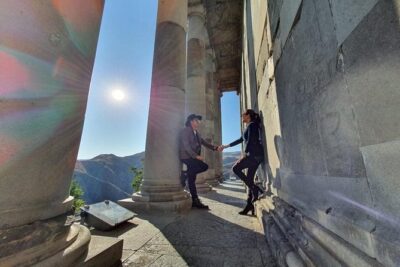
Garni, Geghard, Echmiadzin and Zvartnots Private Tour
Read our review →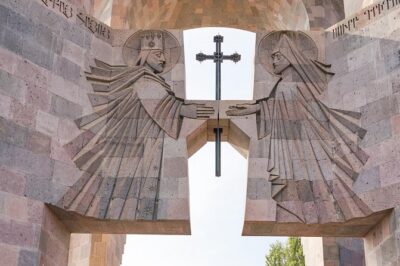
Khor Virap, Echmiadzin Cathedral and Zvartnots Private Tour
Read our review →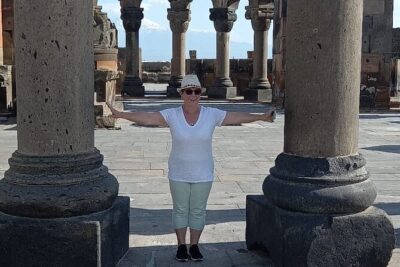
Private Tour to Echmiadzin,St.Hripsime & Gayane Churches, Zvartnots Temple
Read our review →Browse the lists this tour appears in