
Reviewed · TOURS
7 Day Tour through Armenia
Armenia packs an astonishing amount into a small country, and this tour gives you a broad sweep of it: pagan temples, cliffside monasteries, ruined churches, mountain roads, museums, markets, and a proper taste of Armenian brandy. I especially like the balance between Yerevan’s city life and long day trips into the countryside. The itinerary also reaches places many first-time visitors would struggle to connect on their own, including Haghartsin, Marmashen, Amberd, and Goshavank.
I like the cultural range, too. You are not simply ticking off churches. You will see medieval scholarship at Goshavank, the Armenian alphabet at Oshakan, Soviet and modern art at the Parajanov Museum, and handmade crafts at Vernissage. The main drawback is the pace: most stops receive about an hour, and Day 6 has eight stops. You will see a lot, but you will need comfortable shoes and the ability to move on when a place has just begun to draw you in.
Key points to know before booking
- Seven days based in Yerevan: The tour uses the capital as its starting point for city visits and full-day excursions.
- Ancient sites with very different settings: See a Greek-influenced temple at Garni, rock-cut rooms at Geghard, lakeside Sevanavank, and Amberd high on Mount Aragats.
- Strong museum and market finish: The Parajanov Museum, Erebuni Museum, and Vernissage Market add art, archaeology, and everyday craft to the church-heavy schedule.
- Included admissions at listed attractions: Admission is listed as included at the major paid stops, while places such as Cascade and Vernissage are free.
- English service and pickup: An English-language option and pickup are offered, with groups capped at 30 people.
- A full schedule for $885.13 per person: The value is strongest if transport, guiding, and the listed admissions are important to you, though meals and accommodation are not specified.
What this seven-day Armenia route does well
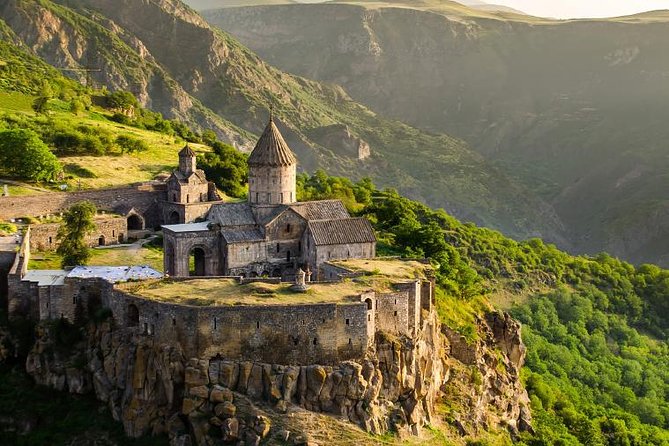
This is a sightseeing tour for someone who wants context and variety without building a complicated route across Armenia. Each day has a clear theme, even when the schedule is busy. Yerevan receives two days of attention, then the route reaches Lake Sevan and Dilijan, Gyumri and the Shirak region, Garni and Geghard, the churches around Ashtarak, and finally two museums plus a market.
The plan also gives you a useful introduction to Armenian architecture. Some buildings are grand and intact. Others are partly ruined, perched over gorges, or surrounded by open countryside. That mix matters. Armenia is not presented as one polished historic center. You see a country where churches, fortresses, villages, rivers, and modern city streets occupy the same trip.
Ari Tour provides the experience in English, and pickup is offered. The maximum group size is 30, so you should not expect a private guide at every site. That size can keep the price lower, but it may also make short visits feel more structured, especially at the busiest points of the schedule.
A few more Yerevan days to weigh up
- The Great Beauty of Armenia: 7-Day Culture and Cuisine Tour
★ 5.0 · 35 reviews - Family package for 7 days
★ 5.0 · 10 reviews - 7 Days Armenia Package with Accommodation, Tours and Transfers
★ 5.0 · 5 reviews
Day 1: Yerevan views, brandy, and the city center
Start at the Cascade Complex, the famous broad stairway near the Opera House. Seven elevators run inside the structure, so you do not have to climb every step. The real prize is at the top, where you get a wide view across Yerevan and, in clear conditions, toward the surrounding mountains.
Give yourself a moment here. Cascade works as both an urban monument and a viewing point. It is also a useful first stop because it introduces Yerevan’s scale before you begin walking through the center. Admission is free.
Next comes the ARARAT Museum, where tasting is part of the visit. You will sample Armenian cognacs with different aging periods, making this more than a quick photo stop. If brandy interests you, this is one of the tour’s most distinctive inclusions. If you do not drink alcohol, you may find the stop less rewarding, though the production tradition still adds useful context to Armenian culture.
The day ends along Mesrop Mashtots Avenue, with an hour of walking through central Yerevan. This is a good counterweight to the museum and Cascade. You can look at the city’s architecture at street level rather than seeing only famous monuments. Since the first day is relatively manageable, it also gives you time to settle into the rhythm of the tour.
Day 2: Armenia’s religious center and Zvartnots
The second day focuses on major religious sites. The Holy Archangels Church is described as part of the main religious and administrative center of the Armenian Apostolic Church, on a site associated with Gregory the Illuminator and an earlier pagan temple. The supplied historical description also refers to Saint Hripsime Monastery, founded in 618. Because several important religious sites are close in this part of Armenia, listen carefully to the guide’s explanation of which building and foundation belongs to which period.
Zvartnots Temple brings you to one of Armenia’s most important early medieval ruins. Construction began in the seventh century under Catholicos Nerses III and continued over two decades. The site is especially useful for seeing how Armenian builders handled a large circular church design, now preserved in ruined form.
The schedule allows about an hour at each stop. That is enough to walk around and take in the main structure, but not enough for a slow archaeological study. I would pay attention to the setting as much as the stones. Zvartnots is not merely an old church; it helps connect Armenia’s religious identity with its architectural skill and its place on the medieval map.
Day 3: Lake Sevan, Dilijan, and two scholarly monasteries
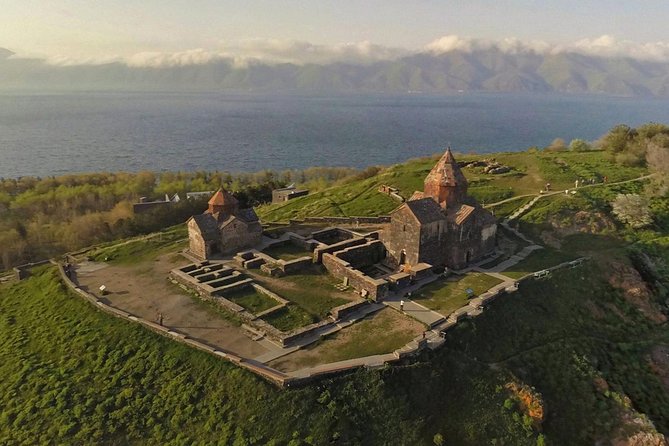
Day 3 is one of the most scenic days. Sevanavank sits by Lake Sevan, described here as the pearl of Armenia. The lake is high above sea level and known for its striking blue water. From the monastery, you get the pairing that makes this stop memorable: dark stone religious buildings above a broad body of water.
The hour at Sevanavank is likely to pass quickly. You will want time for the monastery, the views, and photographs, so do not treat this as a place to linger over every detail. The altitude and open setting may also make the day feel different from Yerevan, even though the visit itself is not a hike.
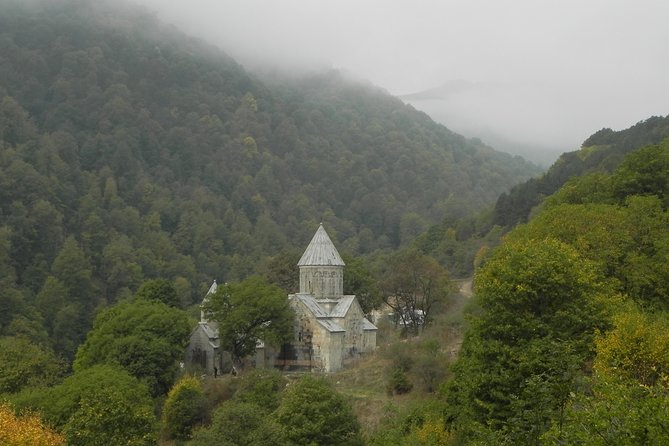
The route then continues to Haghartsin Monastery, surrounded by the wooded setting of Dilijan. Haghartsin served as a religious and educational center from the 10th through 13th centuries. Its appeal comes from the relationship between the buildings and the surrounding nature. The monastery feels less like an isolated monument and more like part of a secluded religious community.
Goshavank adds the academic side of medieval Armenia. From the 12th through 13th centuries, it was a major religious and scholarly center led by Mkhitar Gosh, a scholar, legal expert, and scientist. I like this stop because it keeps the day from becoming a parade of similar church facades. You are seeing a place tied to learning, law, and intellectual life.
With three monasteries in one day, the schedule is efficient rather than leisurely. You will appreciate it if you want broad coverage. If you prefer extended quiet time at one site, this day may feel too tightly arranged.
Same drive out of the city, a completely different day:
- Group Tour: Garni, Symphony of Stones, Geghard, Lavash Baking
★ 5.0 · 1,042 reviews - Group Tour: Lake Sevan (Sevanavank), Dilijan (Goshavank, Haghartsin)
★ 5.0 · 1,036 reviews - Group tour: Khor Virap, Noravank, Areni Winery and Cave
★ 5.0 · 651 reviews - Yerevan: Garni, Geghard, Symphony of Stones & Lavash Baking
★ 5.0 · 589 reviews
Day 4: Gyumri’s stone streets and northern monasteries
Gyumri brings a welcome change of mood. The old city is known for houses built from colorful stone, detailed bas-reliefs, and architectural forms that survived, at least in part, the devastating earthquake of 1988. The city has long been a center of cultural life, and the one-hour walk is designed to let you see its character at street level.
This is not a polished museum district. The interest lies in the old streets, the building materials, and the sense of a city shaped by craft and hardship. I would pay close attention to the details around doorways and facades. They tell you more about Gyumri than a quick look at one landmark.
Marmashen Monastery sits on the left bank of the Akhurian River. Built between 988 and 1029, its churches are considered strong examples of the Ani school of medieval Armenian architecture. The river setting gives the stop a quieter feel, and the complex offers a useful comparison with the better-known monasteries near Yerevan.
Harichavank is located on the western slope of Mount Aragats, on a rocky cape above a canyon. The complex began in the seventh century, while its main church dates from the 13th century. A small chapel near the main buildings is particularly unusual because it sits on a piece of rock that split from the cape during an earthquake. The chapel now projects above the canyon, creating one of the tour’s more dramatic views.
Day 4 combines urban history, river scenery, and mountain architecture. It is another full day, but the sites are different enough to keep the rhythm interesting.
Day 5: Garni and Geghard, Armenia’s essential pairing
Day 5 contains two of the country’s best-known sights. On the way to Garni, the route makes a short stop at Charents Arch. From here, you can look across the Ararat Valley toward Mount Ararat. The view depends on conditions, but the stop gives the journey a strong sense of place.
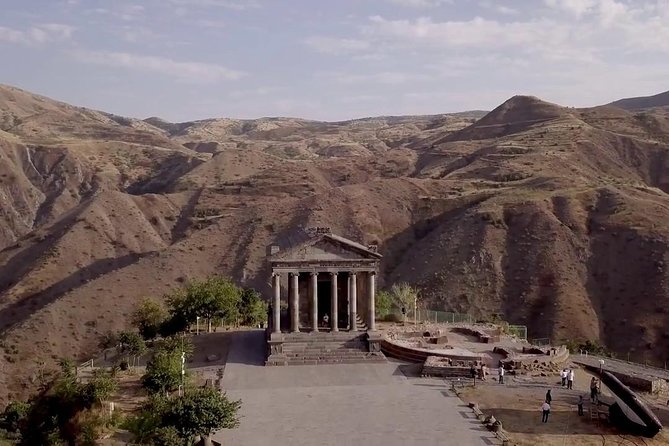
Garni Temple is Armenia’s only surviving pagan temple. Built in the first century BC, it was dedicated to Mithra, the sun god, and later served as a summer residence for Armenian kings for more than four centuries. Its classical columns make it look unlike the medieval churches elsewhere on the tour. That contrast is the point: Armenia’s story includes pagan, Hellenistic, Christian, and modern chapters.
The one-hour visit is enough to walk around the temple and understand its position above the surrounding area. Admission is included. You may wish the schedule allowed more time, particularly if you want to study the masonry or take in the views from every side.
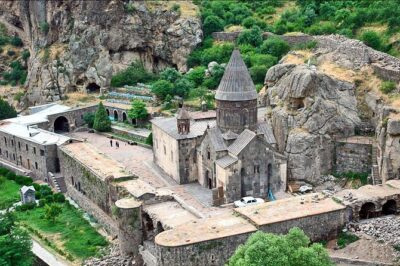
Geghard is the more atmospheric stop. The monastery includes cave structures cut into the rock, along with buildings dating from the 10th through 13th centuries. The main church was built in 1215, and the Avazan Church, dating from 1283, is carved directly into solid stone.
The name Geghard refers to a lance associated with the biblical story of Christ’s crucifixion. The relic was kept here for a long period before being moved to the museum of Echmiadzin Cathedral. Inside and around the complex, you will find caves, medieval dwellings, and numerous khachkars, or carved cross-stones.
I would treat Geghard as a place for close looking. Notice how the monastery shifts from built stone to carved rock. The one-hour allocation gives you the essentials, but this is one stop where a longer visit would be welcome.
Day 6: Eight stops around Ashtarak and Mount Aragats
Day 6 is the most demanding day on paper, with eight listed stops. It begins around Ashtarak with three churches whose names refer to their colors.
Tsiranavor means apricot-colored. This partly ruined fifth-century church sits at the edge of a gorge. Karmravor means red-colored and dates from the seventh century. Spitakavor means white-colored and is a partly ruined 13th-century church, also positioned by a gorge.
These small churches are valuable precisely because they are not all grand monuments. They show the age, scale, and local variety of Armenian religious architecture. Still, three church visits in sequence can blur together if you try to rush. Look for differences in stone color, setting, and condition rather than expecting each stop to feel monumental.
The 1664 Ashtarak Bridge crosses the Kasagh River with three arches of unequal size. The area around it is used for picnics, so this is a pleasant change from enclosed church interiors. Saint Gevorg Church follows, with religious frescoes painted in the 17th century and an association with Saint George, known as the Slayer of Dragons.
Saghmosavank is a 13th-century Armenian Apostolic church named for the spiritual songs sung by Armenian clergy. Its acoustics are part of the appeal. If the group is quiet inside, listen to how the sound behaves in the church rather than treating it as only another architectural stop.
At Oshakan, Saint Mesrop Mashtots Cathedral honors the creator of the Armenian alphabet and marks his burial place. This is one of the most meaningful stops for understanding Armenian identity. The alphabet is not a minor cultural detail here. It is closely tied to language, faith, education, and the survival of Armenian written culture.
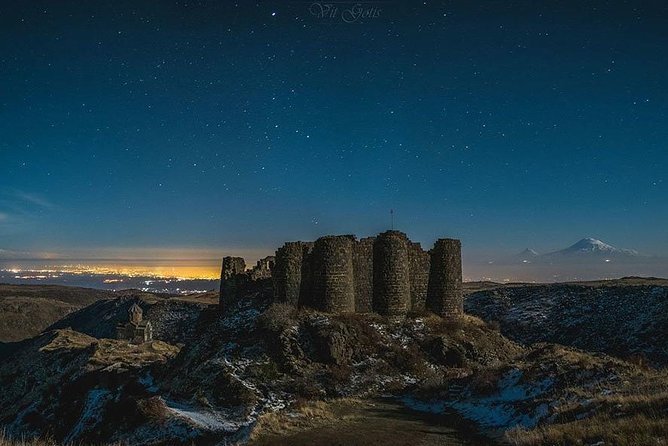
The final stop is Amberd Fortress, 2,300 meters above sea level on the slopes of Mount Aragats. Built in the 10th century, it served as a refuge for Armenian kings during wars. Its location at the meeting point of the Arkashen and Amberd rivers gives it a defensive logic that becomes clear when you see the high setting.
The practical warning is simple: Day 6 is ambitious. You will cover many sites, and several are partly ruined or reached by uneven ground. The reward is range, but you should not expect a relaxed day.
Day 7: Film, archaeology, and Armenian-made crafts
The final day returns to Yerevan and gives you a more modern cultural finish. The Parajanov Museum celebrates the work of the Armenian filmmaker Sergei Parajanov through assemblages, flat and three-dimensional collages, drawings, dolls, and film sketches. This is a strong choice after a week of monasteries because it shows a highly imaginative artistic side of Armenia.
The Erebuni Museum explains the foundation of Yerevan and sits at the foot of Arin Berd hill, where the Urartian fortress Erebouni was built. It places the capital in a much older setting than its modern streets suggest. If you have enjoyed the archaeological material at Garni, Zvartnots, and Amberd, Erebuni gives you another important piece of the story.
Finish at Vernissage Market, an open-air market where local makers sell handmade work. Admission is free. This is the most natural place on the tour to browse for a small souvenir, though the schedule gives you about an hour, so decide what interests you before you start shopping.
The ending works well because it moves from art, to ancient city origins, to present-day craft. It also gives you a chance to buy something connected to the trip rather than leaving with only photographs.
Is $885.13 per person good value?
At $885.13 per person, this is not a budget day-tour package. The price makes more sense if you value a coordinated seven-day route, English-language service, pickup, transportation between far-flung sites, and admission at the listed paid attractions.
The itinerary reaches places that are difficult to combine casually, particularly Marmashen, Harichavank, Goshavank, Amberd, and the Ashtarak churches. Admission is included at the ARARAT Museum and the major listed attractions, while free sites include Cascade and Vernissage. The price does not specify accommodation, meals, or every transport detail, so you should confirm those points before paying.
A group of up to 30 can help spread the cost, but it also means less flexibility. If one monastery captures your imagination, you may not be able to stay longer. If you prefer a private, slow-paced trip, this is not the right format. If you want a practical introduction with many major sites covered, the price can be reasonable.
Who should book this tour?
I would recommend it to a first-time visitor who wants Armenia’s major themes in one organized trip: Christian architecture, pagan and Urartian remains, mountain fortresses, city culture, Armenian art, and local crafts.
Families may also find the variety helpful. The combination of temples, caves, ruins, museums, lakes, and markets keeps the experience from becoming seven days of identical church visits. The descriptions of the service also point to guides who are helpful and well organized, with a welcoming approach that suits a mixed-age group.
You should think twice if you want long meals, independent wandering, or many unscheduled hours. The tour is packed, particularly on Days 3, 4, and 6. Wear practical shoes, keep water close, and accept that the reward for seeing more is spending less time at each stop.
Booking confirmation is provided at the time of booking. Most people can participate, the tour is near public transportation, and free cancellation is available up to 24 hours before the start time. A cancellation made within 24 hours is not refunded, and changes within that period are not accepted.
My recommendation
Book this tour if you want a broad, organized introduction to Armenia and would rather let Ari Tour handle the route between distant sites. Its best features are the sheer variety, the included admissions, the English option, and the chance to move from Yerevan’s museums and markets to monasteries, lakes, gorges, and high mountain ruins.
Skip it if your ideal holiday is slow and unplanned. The schedule is full, and Day 6 in particular asks you to trade lingering time for coverage. For the right person, that is a fair bargain: seven days, a strong first look at Armenia, and far more than a capital-city visit.
FAQ
How long is the Armenia tour?
The tour lasts approximately seven days.
Where does the tour begin?
The tour is based in Yerevan, Armenia. Pickup is offered.
Is the tour available in English?
Yes. The experience is offered in English.
What is the maximum group size?
The maximum group size is 30 people.
Are admission tickets included?
Admission is listed as included at the ARARAT Museum and the paid attractions throughout the itinerary. Cascade Complex and Vernissage Market are listed as free.
Can I cancel for a full refund?
Yes. You can cancel at least 24 hours before the experience start time for a full refund. Cancellations or changes made less than 24 hours in advance are not accepted for a refund.
Newly listed around Yerevan
- Private Yerevan City Tour with museums★ 5.0 · 5 reviews
- Amazing Yerevan★ 5.0 · 7 reviews
- Wine Trip in Yerevan★ 5.0 · 3 reviews
- Mountaintop Eats★ 5.0 · 7 reviews
- Vayots Dzor Areni Wine Route★ 3.5 · 3 reviews
- Group Tour: Tsaghkadzor (Kecharis,Ropeway), Lake Sevan, Trout BBQ★ 5.0 · 7 reviews
- Private tour to Sevan, Dilijan Off-road tour & Horseback riding★ 4.5 · 5 reviews
- Garni Gorge and Azat Reservoir OFF ROAD Tour & Water Sports★ 5.0 · 6 reviews
Tours, compared.
Garni, Symphony of Stones, Geghard, Lavash Baking
Read our review →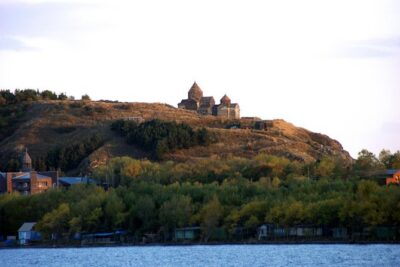
Lake Sevan (Sevanavank), Dilijan (Goshavank, Haghartsin)
Read our review →
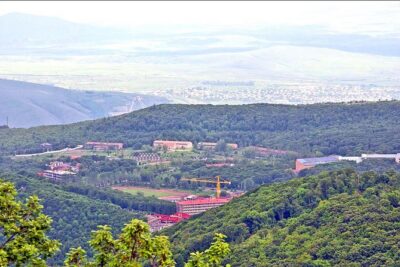
Tsaghkadzor (Kecharis, Ropeway), Lake Sevan, Trout barbecue treat
Read our review →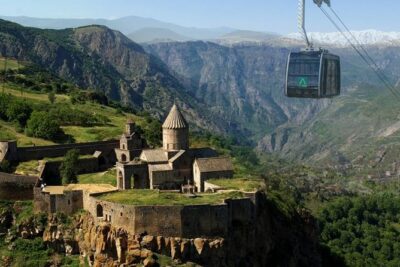
Khor Virap, Noravank, Tatev monasteries (wayback on Ropeway)
Read our review →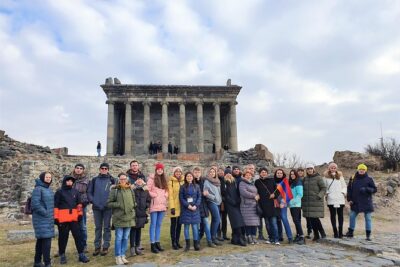
Garni pagan temple, Geghard monastery, Lake Sevan, Sevanavank
Read our review →
Amberd, Aragats, Lake Kari, Saghmosavank, Alphabet
Read our review →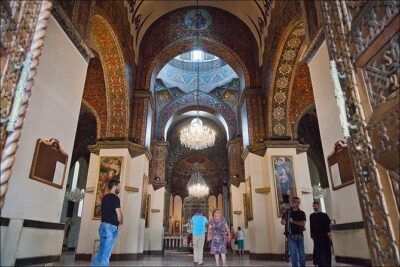
Echmiadzin Cathedral & churches, Zvartnots Temple
Read our review →Browse the lists this tour appears in