
Reviewed · GARNI TEMPLE TOURS
Yerevan: Garni, Geghard, Symphony of Stones & Lavash Baking
The best thing about this six-hour Armenia day trip is its range. In one morning and afternoon, you move from a Mount Ararat viewpoint to a medieval monastery, a pagan temple, a basalt canyon, and a family-style bread demonstration. It gives you a useful first look at Armenia without sending you far from Yerevan.
I especially like the strong mix of history and scenery, and the chance to see lavash made in a traditional setting rather than only hearing about it. Guides such as Yegor, Igor, Hasmik, Anna, and Mery have been praised for clear storytelling and warm group care. The main concern is organization: bilingual departures, long restaurant stops, vehicle air conditioning, and a brief lavash demonstration can affect the experience.
Key points to know before booking
- Mount Ararat comes first: Charents Arch gives you the classic view, but clear weather is essential.
- Geghard is the spiritual highlight: The monastery is partly cut into cliffs and carries UNESCO World Heritage status.
- Garni shows another Armenia: This first-century temple is the country’s only preserved pagan temple.
- The Symphony of Stones costs extra: Allow 300 AMD for entry, plus 1,500 AMD for Garni.
- Lavash is part of the price: The baking demonstration is included, though the amount of hands-on participation may be limited.
- The $23 price is excellent for coverage: Transport, guide service, and bread demonstration are included, but meals and site fees are not.
Why this six-hour route works from Yerevan
I like this route because it packs several very different experiences into a manageable day. You are not spending all six hours at one monument. Instead, the morning and early afternoon move through mountain views, sacred architecture, ancient religion, natural stone formations, and Armenian food culture.
The tour begins at 9:00 am near the Komitas Yerevan State Conservatory at 1a Sayat-Nova Avenue. It ends back at the same meeting point, which is handy if you are staying in central Yerevan and want a simple return to your hotel or a second afternoon in the city.
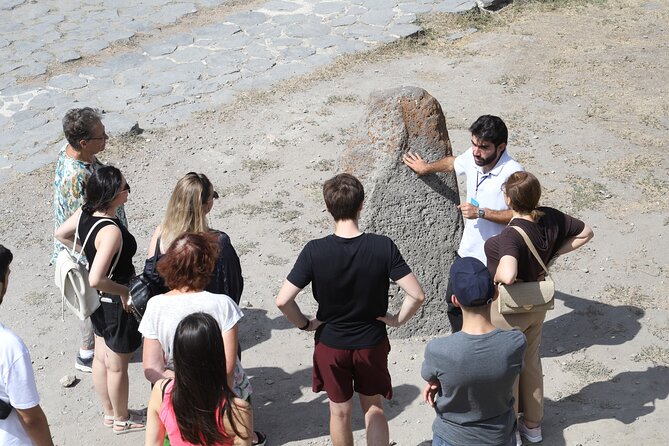
Transport is provided, usually in a minibus or similar group vehicle. The advertised maximum is 20 people. That is small enough for a personal guide in theory, though the quality of group management matters. Several guides have earned praise for answering questions, keeping the day moving, and adding music or humor between stops.
The basic price is hard to argue with. At $23 per person, you receive transport, guide service, and the lavash activity. Add the two site fees, 1,500 AMD for Garni and 300 AMD for the Symphony of Stones, and you still have a low-cost way to reach Armenia’s most important sights outside the capital.
More Garni Temple days out of Yerevan:
- Group Tour: Garni, Symphony of Stones, Geghard, Lavash Baking
★ 5.0 · 1,042 reviews - Group Tour: Garni pagan temple, Geghard monastery, Lake Sevan, Sevanavank
★ 5.0 · 430 reviews - Group Tour: Khor Virap, Garni temple, Geghard, Lavash baking
★ 5.0 · 333 reviews
Charents Arch and the first view of Mount Ararat
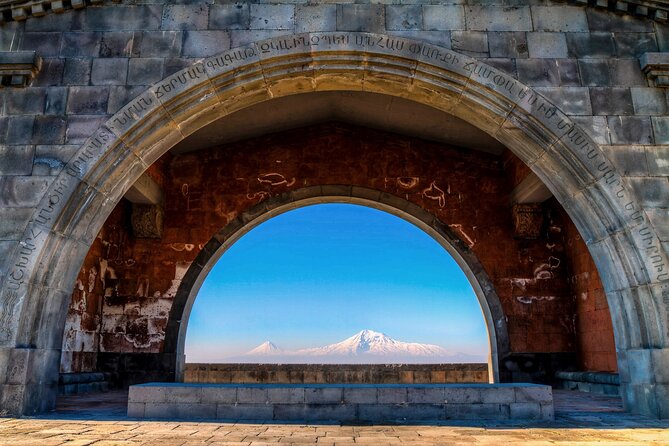
The opening stop at Charents Arch is brief in purpose, but important in mood. The monument sits near Voghjaberd and frames a view toward Mount Ararat, Armenia’s best-known national symbol. The structure was designed by architect Rafael Israelyan in 1957, and the final line of a Yeghishe Charents poem is carved across the front.
This is not only a photo stop. Your guide can explain why Ararat matters so much to Armenian identity and how the monument connects national feeling, poetry, and scenery. On a clear day, the mountain view can set the tone for the entire outing.
Keep your expectations tied to the weather. Several departures have had hazy or cloudy skies, and snow or poor conditions can force changes to the plan. You may still enjoy the monument and the surrounding view, but Mount Ararat itself is never guaranteed.
The scheduled stop lasts about an hour. That gives you time for photographs and an introduction to the day, though the actual view may take only a few minutes once you have found the best angle.
Geghard Monastery, stone, silence, and sacred history
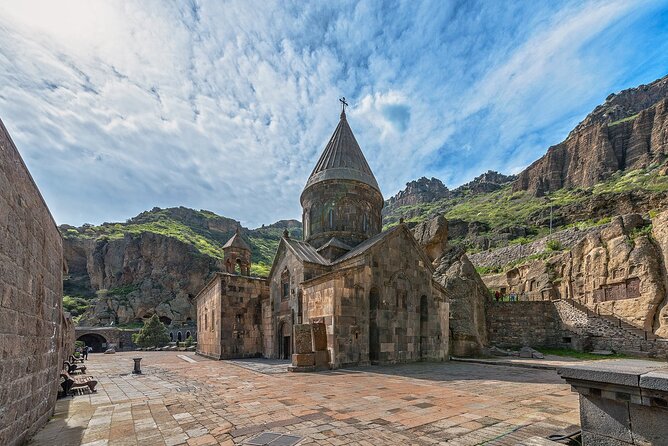
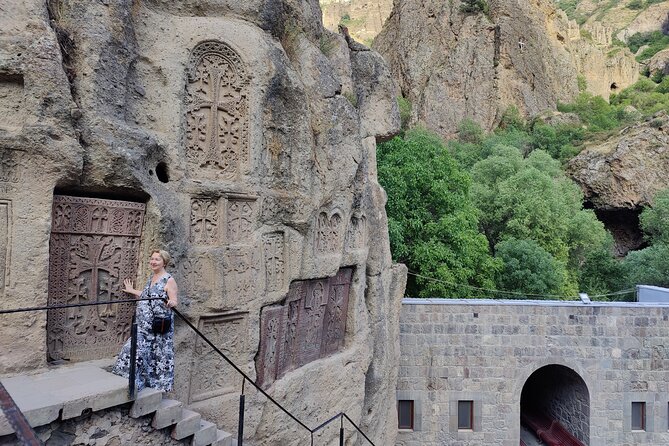
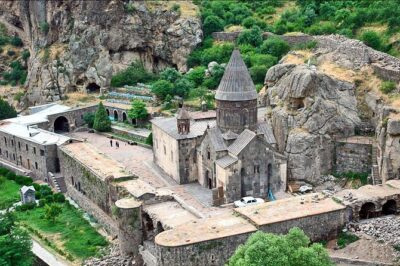
Geghard is the most atmospheric stop on the route. The medieval monastery is partly carved into the surrounding mountain, with cliffs pressing close around the complex. That setting gives the site a strong sense of enclosure and makes the visit feel very different from the open view at Charents Arch.
The name Geghardavank means the Monastery of the Spear. Armenian tradition connects it with the spear used to wound Jesus at the Crucifixion. The relic is now associated with the treasury at Echmiadzin, but the story remains part of Geghard’s importance.
The complex has UNESCO World Heritage status with enhanced protection. Your guide’s explanation is useful here because the stone rooms, chapels, carvings, and religious symbols can be easy to pass through without context. Guides including Yegor, Igor, Hasmik, and Mery have been praised for making Armenian religious and political history understandable in English.
You may hear spiritual singing inside the monastery, depending on the timing and conditions. That can make the visit especially moving, but it is not something to treat as a fixed performance included in every departure.
Plan for about an hour at Geghard. Wear shoes suited to uneven ground and be prepared for a place that feels more like a working sacred site than a polished museum. The tour information lists no entrance charge here, so this stop is included without a separate ticket.
The Symphony of Stones in Azat Canyon
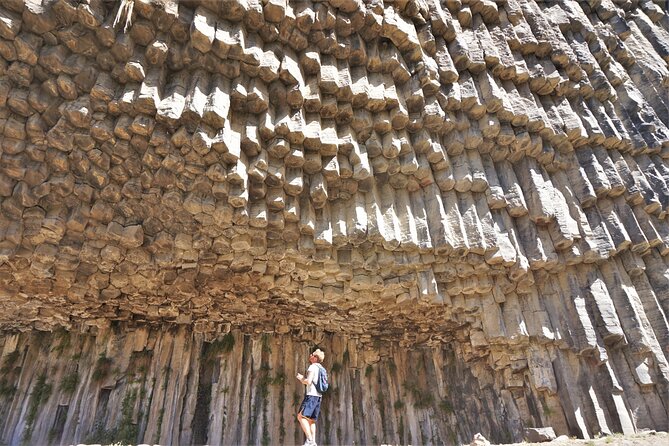
The Symphony of Stones is the trip’s most unusual natural stop. Along Azat Canyon, tall hexagonal basalt columns line the rock face in a pattern that resembles the pipes of a huge organ. The regular shapes were formed by natural volcanic processes, not by builders, which is part of the attraction.
This is one place where the guide’s commentary matters. The stone formations are easy to photograph, but a short explanation helps you understand why the columns have such a striking shape and how they fit into the wider cultural setting around Garni.
The stop is listed at about an hour, and the entrance fee is 300 AMD. Bring some local cash or confirm the accepted payment method before leaving Yerevan. The path and viewing area may feel different in wet, icy, or snowy weather. One departure had to skip or alter this stop because of conditions, so keep a little flexibility in your expectations.
Some past departures have received less explanation here than at Geghard and Garni. If you want more context, ask your guide directly about the basalt formation, the canyon, and the UNESCO connection. It is a small step, but it can turn a quick scenic stop into a more useful visit.
More Geghard Monastery trips:
- Private 7-8-hour Khor Virap, Garni temple & Geghard monastery trip from Yerevan
★ 5.0 · 272 reviews - Garni, Geghard & Symphony Small-Group Day Trip with Lavash Baking
★ 5.0 · 263 reviews - Private Half-Day Garni Temple and Geghard Monastery Tour from Yerevan
★ 5.0 · 245 reviews - Private 7-8 hour Trip to Garni – Geghard – Lake Sevan – Sevanavank from Yerevan
★ 5.0 · 185 reviews
Garni Temple and the story of pre-Christian Armenia
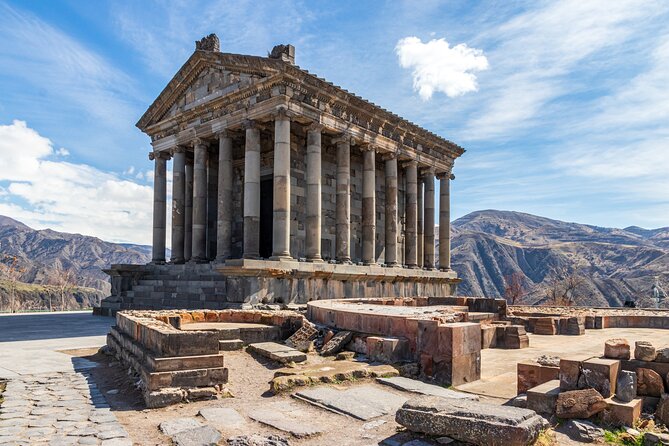
Garni gives the day its clearest link to pre-Christian Armenia. Built in the first century, the temple was dedicated to Mithra, the sun god. It is the only preserved pagan temple in Armenia and in the territory of the former Soviet Union.
That fact alone makes Garni worth the trip. The temple’s classical columns look unlike the medieval stonework at Geghard, and the contrast helps you see that Armenia’s past was not limited to one religion or one period. Your guide can connect the monument to ancient belief, later Christian Armenia, and the long process of rebuilding.
A major earthquake destroyed Garni in 1679. The temple was restored between 1968 and 1975, over roughly eight years. It is important to know that what you see today is a reconstruction, not an untouched ancient building. That does not make the visit less valuable, but it gives you a more honest understanding of the site.
Admission costs 1,500 AMD and is not included in the tour price. The visit is scheduled for about an hour. You will have time for the temple, the surrounding views, and photographs, but the actual pace can depend on group size and how long the meal stop takes.
Lavash baking, the most local part of the afternoon
The final activity is a lavash baking demonstration in Garni. Lavash is Armenia’s famous thin bread, and seeing it made adds a practical, everyday side to a day otherwise centered on monuments and ruins.
The demonstration is included in the $23 price. You can watch the dough being prepared and baked, then taste the result. Several guides have made the bread activity a highlight by explaining the food and connecting it with Armenian home cooking and hospitality.
There is one important qualification. The word master class may suggest that you will roll, stretch, and bake the bread yourself. In practice, some departures have offered only a short demonstration, sometimes around five minutes, with tasting afterward. If hands-on participation matters to you, ask before booking so you know what format is planned.
The setting can also include lunch at a restaurant in Garni, sometimes with a pleasant courtyard and local produce nearby. Lunch is not clearly included in the tour price, and food costs extra. I would not book this excursion mainly for the restaurant meal. Food quality and value have been uneven, and a few people have found the meal expensive for what was served.
A long lunch stop can also change the rhythm of the day. Some departures have spent around an hour and 45 minutes at the restaurant, while the planned lavash portion itself may be much shorter. If you prefer more time at the monuments, ask how the current schedule handles lunch.
Guides, language, and the group experience
The strongest part of this tour is often the guide. Yegor has been praised for his humor, Armenian music selections, patient answers, and strong command of the country’s past. Igor is described as passionate and clear, while Hasmik, Anna, Mery, Ani, Taku, and other guides have also been singled out for friendly service and good storytelling.
That does not mean every departure will feel identical. Some days combine English and Armenian groups, and one experience may use two languages. This can slow the explanations and make it harder for everyone to stay together, especially when the vehicle is full.
Ask at the meeting point how the language arrangement will work. If you are joining for the history, a clear English explanation at each stop is more important than a rushed schedule. A good guide will explain the site before giving you free time, then make sure the group knows where and when to meet.
The listed group limit is 20 people. That is reasonable for a minibus outing, but it is not a private tour. If you want to linger at every carving or control the lunch timing, a private option would suit you better. For a first introduction to the area at a low price, the group format is a fair trade.
Transport, timing, and practical comfort
The route lasts about six hours, starting at 9:00 am and returning to the same Yerevan meeting point. That makes it manageable for most people who want to see the major sights without giving up an entire evening.
The vehicle is generally described as a comfortable minibus, but comfort has not been consistent on every departure. Air conditioning has been a concern on hot days, and some passengers have found the van uncomfortable when requests were not handled quickly. In winter, ice and snow can also affect the route and timing.
Road safety is worth raising plainly. Most driving feedback is positive, including praise for careful drivers such as Vaxo, but one account described aggressive driving. Conditions on Armenian roads can change quickly, so speak up if you feel uncomfortable and keep the group leader informed.
Wear practical shoes and bring water. You should also carry money for the 1,500 AMD Garni entry, the 300 AMD Symphony of Stones ticket, and any lunch or snacks. A light layer is useful because the day moves between open viewpoints, canyon air, stone buildings, and a vehicle.
Confirmation is provided when you book. The tour is near public transportation, and most people can take part. It requires good weather and a minimum number of participants. If weather or numbers force cancellation, you are offered another date or a full refund. You can cancel for a full refund up to 24 hours before the start time.
Who should book this Garni and Geghard tour
I would choose this excursion if you have limited time in Yerevan and want one outing that covers the area’s major cultural sights. It is especially good for a first visit, solo visitors who want company, and anyone who prefers an English-speaking guide rather than arranging several taxis or buses.
It also suits people who like variety. You get a viewpoint, a monastery, a canyon, an ancient temple, and a food demonstration in one route. The guides can add context that is hard to gain from photographs alone.
I would be more cautious if you dislike group travel, want a guaranteed hands-on cooking class, or have little patience for a long restaurant stop. The low price is a real advantage, but it comes with less control over the day and some variation in organization.
Should you book it?
Yes, if you want strong sightseeing value for $23 and can accept a group format. Geghard and Garni are the essential reasons to go, while Charents Arch and the Symphony of Stones add memorable scenery and the lavash demonstration gives the day a local finish.
Before paying, confirm the language arrangement, lunch timing, and whether the bread activity is hands-on or demonstration-only. If the weather forecast is poor, adjust your expectations for Mount Ararat and the canyon. With those limits understood, this is a practical, affordable introduction to the sights around Yerevan.
FAQ
How much does the tour cost?
The listed price is $23 per person. Transport, guide service, and the lavash baking activity are included.
How long does the tour last?
The tour lasts approximately six hours.
What time does the tour begin?
It starts at 9:00 am.
Where does the tour meet?
The meeting point is Komitas Yerevan State Conservatory, 1a Sayat-Nova Avenue, Yerevan 0001, Armenia.
Where does the tour end?
The activity returns to the original meeting point.
Is the tour offered in English?
Yes. English is one of the offered languages.
How many people can join the group?
The maximum group size is 20 people.
Are entrance fees included?
No. Garni costs 1,500 AMD, and the Symphony of Stones costs 300 AMD. Geghard and Charents Arch are listed with no separate admission charge.
Is lunch included?
The listed inclusions do not include lunch. A restaurant stop may be part of the day, so you should expect to pay separately for food.
What happens if the weather is poor?
The experience requires good weather. If it is canceled because of poor weather, you are offered another date or a full refund.
More Symphony of Stones Walks
- Private tour to Garni temple, Geghard Monastery, Symphony of Stones
★ 5.0 · 56 reviews - Garni, Geghard, Charent’s Arch, Symphony of Stones & LavashBaking
★ 4.5 · 48 reviews - Charents Arch, Garni, Symphony of Stones , Geghard, Lake Sevan
★ 5.0 · 41 reviews - Private tour to Garni Pagan Temple, Geghard Cave Monastery & Symphony of Stones
★ 5.0 · 28 reviews
Newly listed around Yerevan
- Wine Trip in Yerevan★ 5.0 · 3 reviews
- Private Yerevan City Tour with museums★ 5.0 · 5 reviews
- Amazing Yerevan★ 5.0 · 7 reviews
- Vayots Dzor Areni Wine Route★ 3.5 · 3 reviews
- Group Tour: Tsaghkadzor (Kecharis,Ropeway), Lake Sevan, Trout BBQ★ 5.0 · 7 reviews
- Mountaintop Eats★ 5.0 · 7 reviews
- Private tour to Sevan, Dilijan Off-road tour & Horseback riding★ 4.5 · 5 reviews
- Garni Gorge and Azat Reservoir OFF ROAD Tour & Water Sports★ 5.0 · 6 reviews
Garni Temple Tours, compared.
Garni, Symphony of Stones, Geghard, Lavash Baking
Read our review →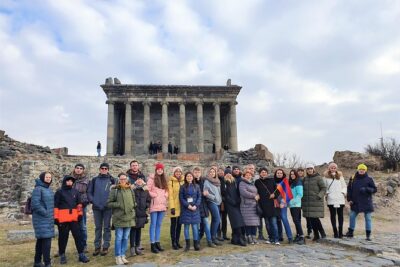
Garni pagan temple, Geghard monastery, Lake Sevan, Sevanavank
Read our review →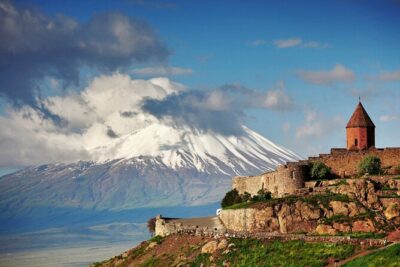
Khor Virap, Garni temple, Geghard, Lavash baking
Read our review →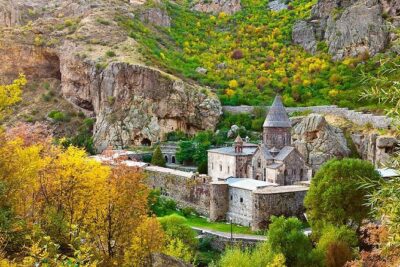
Private 7-8-hour Khor Virap, Garni temple & Geghard monastery trip from Yerevan
Read our review →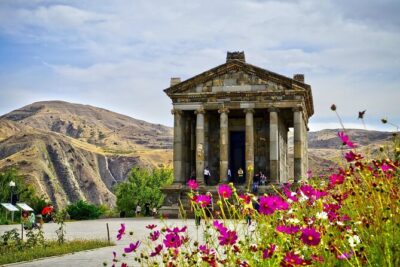
Garni, Geghard & Symphony Small-Group Day Trip with Lavash Baking
Read our review →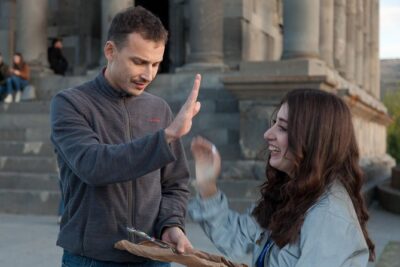
Private Half-Day Garni Temple and Geghard Monastery Tour from Yerevan
Read our review →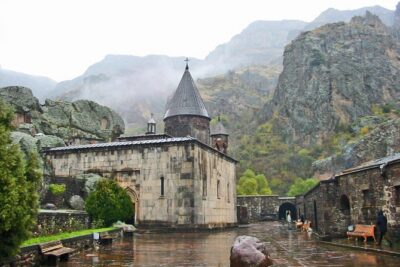
Private 7-8 hour Trip to Garni – Geghard – Lake Sevan – Sevanavank from Yerevan
Read our review →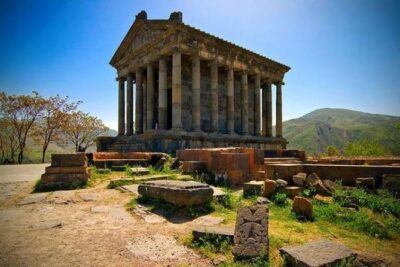
Private tour to Echmiadzin (st Cathedral), Zvartnots, Khor Virap, Garni, Geghard
Read our review →Browse the lists this tour appears in